Categories
Employers & HR Leaders

A Beginner’s Guide to Evaluating Your Corporate Wellness Program

Evaluating Your Corporate Wellness Program

When executed well, corporate wellness programs can reduce absenteeism, improve productivity, and boost morale. However, many organizations fall short in one crucial area: evaluating the effectiveness of their programs.

If you’ve ever wondered whether your wellness program is truly meeting its goals or how to make it better, this guide is for you. Let’s dive into the key components of a successful evaluation and how to use the results to drive meaningful change.

Why Evaluate Your Wellness Program?

Corporate wellness programs are an investment, and like any investment, they should deliver measurable returns. Here are some benefits of evaluating your program regularly:

  • Align with Organizational Goals: Ensure your program supports company objectives, such as reducing healthcare costs or improving employee satisfaction.
  • Identify Participation Gaps: Understand who is engaging with the program and why others are not.
  • Enhance ROI: Use data to allocate resources more effectively and improve outcomes for both employees and the organization.
  • Increase Satisfaction: Tailor your program to better meet the needs of your workforce.

Regular evaluations empower you to address weaknesses and build a program that employees value.

The Core Components of a Wellness Program Check-Up

 

A thorough evaluation starts by examining these core components:

  1. Engagement Components
  • Management Involvement: Are leaders visibly participating in wellness activities and promoting the program?
  • Apps & Trackers: Are digital tools being utilized effectively to monitor progress and encourage participation?
  • Communication: Is the program being promoted in ways that resonate with employees (e.g., newsletters, team meetings, or posters)?
  • Incentives: Are rewards motivating employees to participate and complete wellness initiatives?
  1. Risk Identification
  • Biometric Screenings: Are employees aware of their health metrics like blood pressure and cholesterol levels?
  • Health Risk Assessments: Are surveys being used to identify lifestyle risks such as smoking or inactivity?
  • Claims Analysis: What trends can you identify in health insurance claims that your program could address?
  1. Risk Stratification

Categorizing employees based on their health and lifestyle habits can help you better target interventions. Consider these groups:

  • Healthy with Healthy Lifestyles: Maintain their engagement through challenges and education.
  • Healthy with Unhealthy Lifestyles: Offer coaching and tools to support positive changes.
  • Unhealthy Individuals: Provide access to medical interventions and ongoing support.
Analyzing the Data for Insights

Numbers don’t lie, and data analysis is at the heart of an effective wellness program evaluation. Here are key metrics to review:

  • Participation and Completion Rates: Measure how many employees join and complete activities or programs.
  • Health Risk Reductions: Track improvements in key metrics like weight, blood pressure, or smoking cessation.
  • Satisfaction Surveys: Use feedback to gauge how well the program meets employee needs.
  • Financial Impact: Assess whether claims costs are decreasing and calculate savings from reduced absenteeism.
  • Productivity Metrics: Are employees reporting better focus or energy levels after engaging in wellness initiatives?

These insights will guide decisions on where to improve or invest further.

Building a Plan for Continuous Improvement

Evaluation is not a one-time task—it’s an ongoing process. Use your findings to make data-driven adjustments. Here’s how:

  • Iterate on Interventions: Introduce new initiatives based on feedback and data trends. For example, if participation in group fitness classes is low, consider offering more flexible virtual options.
  • Implement Feedback Loops: Regularly ask employees what’s working and what’s not, then refine your approach.
  • Measure Outcomes: Track the results of changes to ensure they’re delivering the desired improvements.

Continuous improvement is key to keeping your program relevant and effective

Conclusion

Evaluating your corporate wellness program doesn’t just benefit the bottom line; it ensures your employees feel supported and valued. By following the steps outlined in this guide, you’ll not only improve your program’s effectiveness but also foster a healthier, happier workforce.

Categories
Employers & HR Leaders

Addressing Employee Burnout: A Guide for HR Leaders

Introduction: The Prevalence and Impact of Employee Burnout

Burnout isn’t just a personal health issue—it’s a systemic challenge that costs organizations in productivity, engagement, and employee retention. Defined by the World Health Organization (WHO) as a syndrome stemming from “chronic workplace stress that has not been successfully managed,” employee burnout manifests as exhaustion, feelings of inefficacy, and mental distance from one’s work. As HR leaders, recognizing the early warning signs and addressing burnout comprehensively is vital. Drawing on our experience at Avidon Health, where health coaches work closely with individuals to identify and address burnout, we see firsthand the toll it can take and the power of targeted intervention to support lasting well-being.

1. Understanding the Multi-Layered Causes of Burnout

Burnout is rarely caused by one factor alone. Instead, it often emerges from a combination of individual, organizational, and even societal factors. Health coaches at Avidon Health often see individuals experiencing burnout due to overwork, lack of autonomy, misaligned expectations, or inadequate support structures within their organization. In many cases, employees feel torn between high demands and limited resources to manage them.

Research from Gallup has highlighted how factors like unmanageable workload and lack of role clarity significantly contribute to employee burnout. Gallup found that employees with unmanageable workloads are 70% more likely to experience burnout than those with better work balance. Recognizing this multi-layered reality, we advocate for a holistic approach to burnout prevention and recovery, identifying root causes at both the individual and organizational levels.

2. Identifying Symptoms of Employee Burnout

A critical part of preventing burnout is being able to recognize the signs early. WHO outlines three primary dimensions of burnout: exhaustion, inefficacy, and mental distance. These dimensions manifest in observable behaviors, which Avidon Health’s coaches frequently identify through structured wellness assessments and behavioral insights.

For HR leaders, here are some typical signs to watch for:

  • Sustained Exhaustion: Employees consistently look drained or tired, struggle to engage actively, or express a lack of motivation.
  • Feelings of Inefficacy: Employees show frustration or dissatisfaction with their own productivity, sometimes doubting their value or contribution.
  • Increased Mental Distance: Detachment from team activities, negative attitudes towards tasks, or a noticeable decrease in enthusiasm can signal a deeper issue.

These signs are vital indicators for HR leaders to notice and address. Timely intervention can help re-engage employees before burnout deepens.

3. Key Questions to Help Employees Identify Their Burnout Drivers

At Avidon Health, our health coaches guide employees through self-reflective exercises to help them pinpoint what’s driving their burnout. Encouraging employees to ask themselves these questions is a critical step in self-awareness, one that can help both them and HR teams understand the most effective ways to address burnout. Here are a few targeted questions that explore each dimension:

  • For Exhaustion: “What tasks or aspects of my role feel particularly draining? Are there tasks that energize me, and how often do I engage in those?”
  • For Inefficacy: “What barriers are preventing me from feeling accomplished? Are there resources or changes that could help me improve?”
  • For Mental Distance: “What aspects of my work do I feel disconnected from? Have there been recent changes in my outlook on work, and when did this shift start?”

These questions, when explored with support from HR or a health coach, can uncover underlying causes that may not be immediately apparent but are essential for developing a path to improvement.

4. Practical Steps to Address Common Burnout Drivers

Through Avidon Health’s experience, we’ve observed that practical, tailored interventions make a meaningful difference in addressing employee burnout. Here are strategies we’ve found to be effective in each burnout dimension:

  • For Exhaustion:

    Support a realistic workload balance by adjusting assignments and expectations. Encourage breaks and implement flexible work arrangements where possible. Studies from the American Psychological Association (APA) show that a 15-minute break every 75-90 minutes can significantly boost focus and reduce fatigue.

  • For Inefficacy: Simplify processes by eliminating unnecessary steps, providing resources that streamline work, or offering skills training. Our coaches emphasize skill-building to help employees regain confidence, a tactic that proves especially effective for employees who feel overwhelmed by their roles.
  • For Mental Distance: Foster a culture where employees feel they contribute to a larger purpose. Recognize accomplishments openly and encourage employees to connect with projects that align with their interests or strengths. A study by Deloitte revealed that employees who feel their work has a purpose report higher engagement and lower stress, underscoring the role of meaningful work in burnout prevention.

By providing a supportive environment that directly addresses each driver of burnout, organizations can reduce its occurrence and foster a more resilient workforce.

5. Building a Culture That Supports Well-Being and Engagement

Building a supportive culture is paramount. Avidon Health’s health coaches consistently see that environments encouraging openness, psychological safety, and work-life balance have fewer cases of burnout. For HR leaders, this means creating channels where employees feel comfortable expressing their concerns without fear of judgment or reprisal. From our experience, we know that initiatives like mental health days, regular team check-ins, and resilience training make a tangible difference.

Additionally, fostering a culture where well-being is prioritized can help employees feel valued beyond their immediate work performance. This approach not only helps prevent burnout but also enhances retention, morale, and long-term productivity.

Conclusion: Moving from Burnout to Re-Engagement

Employee burnout isn’t a problem that can be solved overnight. However, with a proactive, multifaceted approach, HR leaders can create a supportive environment that reduces burnout’s prevalence and impact. By fostering a culture of well-being, HR leaders can re-engage employees and help them rediscover a sense of purpose and fulfillment in their roles.

At Avidon Health, we’ve seen the difference that intentional, supportive practices can make. Health coaching plays a vital role in recognizing, addressing, and ultimately reducing burnout, showing that, with the right tools and mindset, every organization can foster resilience and empower employees to thrive.

Categories
Employers & HR Leaders

5 Warning Signs of ‘Carewashing’ in Your Organization

5 Warning Signs of ‘Carewashing’ in Your Organization

With over a decade of experience working with organizations across industries, we’ve seen a lot of shifts in how companies approach workplace wellness. But in the years following the pandemic, a new pattern has emerged as people settle into hybrid and flexible work arrangements: carewashing. This term describes the appearance of a caring culture, where wellness programs and supportive language are used to enhance an organization’s image without substantial backing. As stress and burnout continue to rise, employees quickly recognize when these efforts are only skin-deep, leading to distrust, disengagement, and high turnover.

To help HR and wellness leaders assess their organizations, here are five warning signs of carewashing, along with actionable steps to foster genuine, impactful well-being at work.

1. Inconsistent Leadership Messaging

One of the most obvious signs of carewashing is when leaders verbally support wellness but act in ways that contradict their message. For example, a manager might promote a “no-contact after hours” policy during a wellness workshop yet send emails to employees at night with tasks for the following morning.

Why It’s a Problem: These mixed signals create confusion and diminish trust in leadership. Employees may question the sincerity of wellness efforts, leading to increased stress and burnout.

What to Do: Equip leaders with training on aligning actions with wellness policies. Encourage them to model healthy boundaries, communicate expectations clearly, and adhere to the same policies they promote.

2. Wellness Programs Without Follow-Through

Another red flag is when organizations offer wellness programs — such as meditation apps, yoga classes, or mindfulness workshops — but fail to address the underlying issues impacting employee well-being. Without integrating these initiatives into the organization’s culture, they become superficial offerings rather than true resources.

Why It’s a Problem: When wellness initiatives are not meaningfully embedded in the culture, they appear as “check-the-box” activities, doing little to address root causes of stress, workload imbalances, or lack of support.

What to Do: Solicit regular feedback from employees about wellness program effectiveness and implement changes based on their input. Make wellness a core part of the company culture by encouraging managers to support mental health days, provide flexibility, and create regular check-ins for work-life balance.

3. High Turnover of “Wellness-Driven” Hires

Organizations that advertise a “caring culture” to attract new hires but fail to deliver on those promises will often see high turnover among those employees. When reality doesn’t match expectations, new hires who joined for the wellness benefits may feel disillusioned and leave.

Why It’s a Problem: High turnover, especially among hires drawn by wellness claims, is a clear indicator of carewashing and culture misalignment. It not only impacts morale but also the organization’s reputation as a workplace that values its people.

What to Do: Ensure job descriptions and recruitment messaging are transparent and accurately reflect the work environment. Additionally, provide managers with training to foster a culture where team members feel supported in asking for flexibility or mental health support.

4. Lack of Psychological Safety

In a true culture of care, employees feel safe to speak up, share concerns, and ask for support when needed. Carewashing organizations, however, often lack psychological safety, making employees reluctant to voice needs or raise issues for fear of negative repercussions.

Why It’s a Problem: Without psychological safety, employees can’t fully engage or participate in wellness programs, making these initiatives ineffective. Employees who don’t feel supported may struggle with stress in isolation, decreasing overall productivity and engagement.

What to Do: Create channels for safe, anonymous feedback and establish an open-door policy for wellness discussions. Train leaders to respond to employee concerns constructively and transparently to reinforce a culture of trust and support.

5. Wellness Initiatives as a PR Move

If wellness efforts seem more like a public relations strategy than genuine initiatives, your organization may be carewashing. When wellness programs are promoted to the public as proof of a “caring culture” but are not prioritized internally, employees can feel manipulated and disengaged.

Why It’s a Problem: Using wellness initiatives primarily for publicity can lead to distrust, resentment, and poor workplace morale. Employees are quick to recognize when wellness initiatives are designed to “look good” rather than do good.

What to Do: Regularly evaluate wellness initiatives for actual employee impact, not just external optics. Ensure that programs address employee needs rather than simply meeting a public relations goal. Align wellness metrics with employee satisfaction and engagement surveys to ensure initiatives are truly beneficial.

Conclusion

Creating a workplace culture that genuinely prioritizes employee well-being is about more than offering wellness perks or crafting clever marketing. From our decade-plus experience partnering with organizations, we know that successful cultures of care require a commitment that goes beyond surface-level initiatives. When employee well-being is woven into the fabric of the organization — supported by transparent leadership, consistent actions, and a true focus on psychological safety — the positive impact on engagement, productivity, and retention is substantial and lasting.

What You Can Do Now:
  1. Conduct a Wellness Audit: Regularly assess your wellness programs from the employee’s perspective. Are these initiatives meeting actual needs? Conduct anonymous surveys and engage in focus groups to gather honest feedback, and adjust programs based on what you learn.
  2. Train and Empower Leaders: Ensure managers understand how their actions affect the culture of care. Equip them with the tools and training to recognize signs of burnout, model healthy work boundaries, and genuinely support their teams’ mental health.
  3. Embed Wellness into Daily Operations: Go beyond stand-alone wellness events by integrating well-being practices into everyday routines. This could mean implementing flexible work schedules, setting realistic workload expectations, and encouraging regular breaks and time off.
  4. Build Channels for Honest Feedback: Create safe, anonymous ways for employees to share their well-being concerns and experiences. Regularly review feedback with leadership teams and take transparent, meaningful action to address identified issues.

By recognizing and addressing these warning signs, leaders can shift from merely “checking the box” on wellness to fostering a resilient, engaged, and genuinely cared-for workforce. In today’s competitive talent market, where employees seek workplaces that respect and support them, this commitment to authentic care is not just the right thing to do — it’s the key to sustained organizational success.

Categories
Employers & HR Leaders

Employee Wellness: A Guide to a Healthier Workday

Employee Wellness: Tips for a Thriving Workplace

Maintaining physical wellness is essential for overall health and productivity, even when working in a confined space like a cubicle. While it might seem challenging to stay active and healthy in a small workspace, there are numerous strategies that can help employees incorporate physical wellness into their daily routines. This article explores various desk exercises, ergonomic practices, movement breaks, and additional tips to promote employee wellness in a cubicle or small workspace. 

Desk Exercises 
Stretching Routines 

To relieve tension and improve circulation, especially for those who sit at a desk for long hours, stretching is a simple yet effective way. Here are some easy stretches that can be done right at your workstation: 

  • Neck and Shoulder Stretches: Gently tilt your head towards one shoulder, hold for 15-30 seconds, and repeat on the other side. Roll your shoulders forward and backward to release tension. 
  • Wrist and Hand Stretches: Extend one arm in front of you with the palm facing up. Use your other hand to gently pull back on the fingers, stretching the wrist and forearm. Hold for 15-30 seconds and switch sides. 
  • Leg and Back Stretches: While seated, extend one leg out straight and reach towards your toes, holding for 15-30 seconds. For a back stretch, sit up straight and twist your torso to one side, holding onto the back of your chair for support. 
Chair Yoga 

Chair yoga is a fantastic way to incorporate gentle movement and mindfulness into your workday without leaving your desk. Here are a few simple chair yoga poses: 

  • Seated Cat-Cow Stretch: Sit up straight with your feet flat on the floor. Inhale and arch your back, lifting your chest and looking up (Cow Pose). Exhale and round your spine, tucking your chin to your chest (Cat Pose). Repeat for several breaths. 
  • Seated Forward Bend: Sit on the edge of your chair with your feet hip-width apart. Inhale and lengthen your spine, then exhale and fold forward, reaching towards the floor. Hold for a few breaths and slowly rise back up. 
  • Seated Spinal Twist: Sit up straight with your feet flat on the floor. Place your right hand on the back of your chair and your left hand on your right knee. Inhale and lengthen your spine, then exhale and twist to the right. Hold for a few breaths and repeat on the other side. 
Ergonomics 
Proper Posture 

Maintaining good posture is crucial for preventing discomfort and long-term health issues. Here are some tips for setting up an ergonomic workstation: 

  • Chair: Use a chair that supports the natural curve of your spine. Adjust the height so your feet are flat on the floor and your knees are at a 90-degree angle. 
  • Desk: Position your desk so that your elbows are at a 90-degree angle when typing. Your wrists should be straight and your hands at or slightly below elbow level. 
  • Monitor: Place your monitor at eye level, about an arm’s length away. The top of the screen should be at or just below eye level to prevent neck strain. 
Standing Desks

Alternating between sitting and standing can help reduce the risks associated with prolonged sitting. Here are some tips for using a standing desk in a small space: 

  • Adjustable Desk: Invest in a desk that can be easily adjusted from sitting to standing height. This allows you to switch positions throughout the day. 
  • Anti-Fatigue Mat: Use an anti-fatigue mat to reduce strain on your feet and legs while standing. 
  • Posture: Maintain good posture while standing by keeping your shoulders relaxed, your back straight, and your weight evenly distributed on both feet. 
Movement Breaks 
Regular Breaks 

Taking regular breaks to move around is essential for maintaining physical wellness. Here are some ideas for incorporating movement into your day: 

  • Pomodoro Technique: Use the Pomodoro Technique to work in focused intervals (e.g., 25 minutes) followed by short breaks (e.g., 5 minutes). During breaks, stand up, stretch, or walk around. 
  • Desk Exercises: Perform simple exercises like calf raises, seated leg lifts, or desk push-ups during breaks. 
Additional Tips 
Hydration 

Staying hydrated is crucial for overall health and can help improve focus and energy levels. Here are some tips for drinking more water throughout the day: 

  • Water Bottles: Provide employees with reusable water bottles and encourage them to keep them at their desks. 
  • Hydration Stations: Set up hydration stations with water dispensers and encourage employees to refill their bottles regularly. 
Healthy Habits 

Incorporating healthy habits into the workday can further promote physical wellness. Here are a few ideas: 

  • Walking Meetings:Encourage walking meetings instead of sitting in a conference room. This allows employees to get some fresh air and exercise while discussing work matters. 

  • Stairs: Encourage employees to take the stairs instead of the elevator whenever possible. This simple change can add more physical activity to their day.
Creating An Employee Wellness-Focused Workplace

Maintaining employee wellness in a cubicle or small workspace is entirely possible with the right strategies. By incorporating desk exercises, ergonomic practices, movement breaks, and healthy habits, employees can improve their health and productivity. Encouraging these practices not only benefits individual employees but also contributes to a healthier, more engaged workforce. Employers should support and promote these initiatives to create a positive and wellness-focused work environment. 

By integrating these tips into daily routines, employees can stay active, reduce stress, and enhance their overall well-being, even in a small workspace. Let’s make employee wellness a priority and create a healthier workplace for everyone. 

Categories
Employers & HR Leaders

Digital Coaching: A Cost-Effective Wellness Option for Small Businesses

Digital Coaching

In today’s fast-paced world, most of us know we need to make changes in our lives to improve our sleep, manage stress, get more exercise, eat well, maintain a healthy weight, and, in some cases, reduce our use of alcohol or other substances. But knowing we should change and following through are two very different things. Health and wellness programs offer a structured way to support these changes, but the programs that work can be costly, especially for small businesses. And even with the best intentions, there’s no guarantee that employees will consistently stick to these programs—because, well, they’re only human.
For small businesses with limited budgets, this unpredictability makes it hard to justify an investment in wellness programs that may not yield consistent engagement. Many wellness offerings are comprehensive but too rigid and hard to integrate into real life. They may be one-size-fits-all and fail to account for the unique lifestyles, challenges, and limitations of each employee. Live, one-on-one coaching is incredibly effective but can quickly become cost-prohibitive if a small business wants to make it available to all employees on an ongoing basis.
The Rise of Digital Coaching
This is where digital coaching steps in as a cost-effective and flexible solution. Digital coaching can replicate the personalized guidance, support, and accountability typically provided by human coaches, but in a format that’s more scalable and affordable for small businesses. Think of digital coaching as a wellness coach in your employee’s pocket—always accessible, flexible, and adaptable to individual goals.
Digital coaching programs, when done well, can provide personalized recommendations based on each user’s health goals and challenges, and they include tools to help employees track progress, adjust their goals, and stay motivated. Unlike static wellness programs, digital coaching adapts to an individual’s journey, making it more realistic and effective for the ups and downs of real life.
Behavior Change and Cognitive Training: The Essentials
For any wellness program to be worth the investment, it must focus on true and sustainable behavior change. Small businesses should avoid programs that only address superficial lifestyle changes without including components for cognitive training, such as stress management techniques, habit-forming strategies, and mental resilience exercises. Real change is about understanding why we do what we do and gradually shifting those habits over time. Digital coaching that integrates cognitive training can help employees make these changes in a way that’s accessible and sustainable.
While digital coaching may not fully replicate the depth of a live coaching session, it’s the next best option for companies on a budget. Digital coaching has the added benefit of being more approachable for employees who may find jumping into deeply personal issues with a live coach intimidating. In fact, many employees may find the digital format less intrusive, allowing them to address sensitive issues at their own pace and feel a greater sense of autonomy.
 
 
The Perfect Complement to Live Coaching
For companies that already offer live coaching sessions, digital coaching can be a valuable complement. Employees can use digital coaching between live sessions to reinforce the healthy habits they’re working on. This combination maximizes the benefits of live coaching by helping employees maintain focus on their wellness goals and stay engaged, even when they’re not in direct contact with a coach.
 

Final Thoughts 

Digital coaching isn’t a replacement for live, one-on-one coaching, but it’s the most effective, affordable alternative for small businesses wanting to support their employees’ well-being without breaking the budget. It offers the flexibility, accessibility, and personalization needed for sustainable behavior change, all at a fraction of the cost of traditional wellness programs. For small businesses, investing in digital coaching can be a smart move that provides employees with an approachable, engaging, and scalable way to achieve lasting health improvements. 
Categories
News

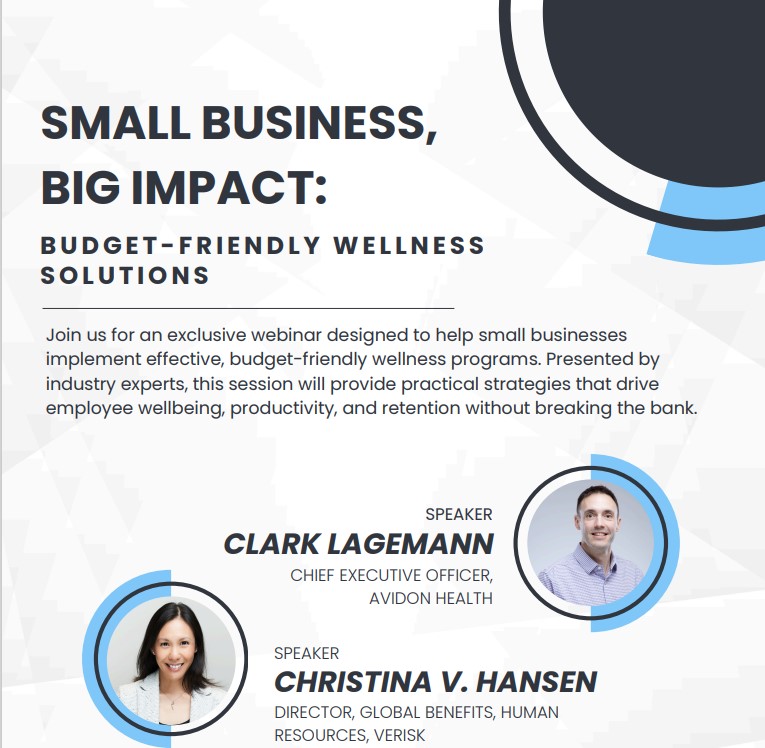
NJDOL Webinar: Budget-Friendly Wellness Solutions

Small Business, Big Impact: Budget Friendly Wellness Solutions

Avidon Health’s CEO, Clark Lagemann, recently shared his expertise at a webinar hosted by the NJDOL, titled “Small Business, Big Impact: Budget-Friendly Wellness Solutions.” The session explored practical strategies for small businesses to implement effective wellness programs without breaking the bank.

This webinar explores strategies to enhance your employees’ overall well-being, ultimately boosting productivity and retention. By watching, you’ll gain valuable insights on:

  • The Power of Wellness Programs: Discover how effective wellness programs can significantly improve employee satisfaction, reduce turnover, and boost productivity.
  • Mental Health Matters: Learn practical strategies to address mental health concerns within your organization and provide necessary support.
  • Physical Well-being Initiatives: Explore cost-effective ways to promote physical health, such as encouraging healthy eating habits, fitness challenges, and flexible work arrangements.
  • Engaging Your Workforce: Discover innovative techniques to motivate and engage your employees, fostering a positive and productive work environment.
  • Measuring Success: Understand the importance of both Return on Investment (ROI) and Value on Investment (VOI) in evaluating the effectiveness of your wellness programs.

Ready to elevate your workplace?

Click here to watch the full webinar recording and start implementing these strategies today.

Categories
Employers & HR Leaders

The Hidden Costs of Ignoring Workplace Mental Health

Workplace Mental Health

In the face of a rising mental health crisis, HR and People Operations leaders find themselves at a pivotal moment. The workplace mental health landscape is changing rapidly, especially for young adults entering the workforce. Pre-pandemic, rates of anxiety and depression among young people were already climbing. Today, with added pressures from economic instability, social media’s pervasive influence, and a volatile social climate, younger generations are facing unprecedented mental health challenges, even as society returns to a semblance of “normalcy.”

As an HR leader, you’re in a unique position to address these challenges in your workplace. Neglecting mental health doesn’t just impact individual employees—it reverberates throughout teams, affecting morale, productivity, and retention. This article explores the risks of ignoring mental health at work and provides actionable steps for HR professionals to create a supportive environment that benefits everyone.

Understanding the Scope of the Mental Health Crisis

Over the last decade, researchers have tried to unravel the root causes of the mental health epidemic among young adults. Social psychologist Jonathan Haidt and others link this crisis to the effects of smartphones and social media algorithms, which often pull users into negative feedback loops. Yet, others point to external factors like economic pressures, political instability, and a world marred by school shootings and climate anxieties.

One recent hypothesis, known as “prevalence inflation,” suggests that our constant discourse around mental health might lead individuals to interpret normal life stresses as medical issues. For instance, Lucy Foulkes, a psychologist from the University of Oxford, has raised concerns that excessive mental health messaging can create a cycle of self-diagnosis that might encourage avoidance of stressful situations rather than building resilience. As HR leaders, it’s vital to balance raising workplace mental health awareness with empowering employees to manage everyday challenges.

The workplace implications of these societal trends are clear. A failure to support employees’ mental health doesn’t just diminish individual well-being—it leads to decreased productivity, increased absenteeism, and ultimately higher turnover. HR leaders must take steps to mitigate these impacts and support employees through the unique challenges of today.

The Costs of Ignoring Workplace Mental Health

Consider this scenario: Sarah, a talented young professional, begins struggling with feelings of anxiety as she adapts to her first full-time role post-graduation. She’s bombarded with stories about mental health on social media, making her feel that her anxiety is insurmountable. As her symptoms worsen and go unnoticed by her managers, her engagement drops, she starts taking more sick days, and her work quality declines. Soon, Sarah leaves the company, leading to the loss of a valuable employee.

This scenario reflects a common issue in workplaces today. Studies show that untreated mental health conditions can cost organizations millions in lost productivity. According to the World Health Organization, depression and anxiety cost the global economy over $1 trillion annually in lost productivity. For HR professionals, investing in mental health support is not just a compassionate choice; it’s a strategic one.

Younger employees, often more exposed to economic instability and social pressures, are particularly vulnerable. Researchers at Johns Hopkins found that certain societal events, like the overturning of Roe v. Wade, directly impact young people’s mental health. Unlike older generations, who may have developed greater emotional resilience over time, young adults report heightened levels of anxiety and depression. As HR leaders, understanding these generational nuances is essential for creating effective mental health support systems.

Real-World Examples of Mental Health Interventions

Recognizing the mental health crisis doesn’t mean overhauling workplace policies overnight; it means taking strategic, thoughtful steps to support employees effectively. Here are two approaches organizations have taken:

Example 1: Preventive Workplace Mental Health Programs 

Some companies have implemented organization-wide preventive mental health programs. These programs offer all employees access to resources like mindfulness training, resilience workshops, and mental health apps. Psychologists advocate for such “universal interventions,” which equip all employees with tools to handle stress proactively. This approach can build a foundation of mental well-being across the organization, benefiting employees before they reach a crisis point.

Example 2: Tailored Support for At-Risk Employees 

Critics, caution against relying solely on awareness campaigns, as these may inadvertently reinforce feelings of helplessness. Instead, companies can adopt a more targeted approach by focusing on employees with acute needs. By identifying employees who are most at risk, HR can tailor resources—such as private counseling or flexible work hours—that provide genuine support where it’s needed most.

HR leaders must walk a fine line between offering broad support and avoiding the “one-size-fits-all” trap. By adopting a balanced approach, they can ensure that employees feel empowered rather than overwhelmed.

Actionable Steps for HR Leaders

If you’re an HR leader looking to make meaningful strides in mental health support, here are some steps to consider:

  1. Foster a Mental Health-Friendly Culture
    • Creating a supportive culture starts with normalizing mental health conversations. Consider implementing monthly “mental health check-ins,” where team members can openly discuss challenges in a safe, non-judgmental setting. Additionally, offer training sessions that help managers recognize signs of distress and respond appropriately.
  2. Introduce Preventive Mental Health Programs
    • Provide access to workplace mental health resources that empower employees before a crisis. Mindfulness sessions, resilience workshops, and even mobile mental health tools can be valuable preventive measures. However, ensure these resources are communicated as tools for well-being rather than as solutions for diagnosing mental illness.
  3. Offer Targeted Support for At-Risk Employees
    • Use anonymous surveys and regular check-ins to gauge mental health levels across the organization. For employees struggling the most, offer targeted support, such as private counseling or flexible schedules. By focusing on those with the greatest need, you can provide a more meaningful, impactful response to mental health challenges.
  4. Collaborate with Benefits Providers
    • Make mental health support more accessible and affordable by working closely with benefits providers. Many insurance plans now cover mental health resources, such as therapy sessions and mental health apps. These benefits help employees feel supported while keeping costs manageable for both the employee and the organization.
The Role of HR in Building a Resilient Workforce

Addressing mental health is no longer optional; it’s imperative. HR and People Operations professionals are uniquely positioned to drive this transformation by integrating mental health into workplace culture. By balancing awareness with action, you can create an environment that empowers employees, supports resilience, and ultimately drives organizational success.

Building a resilient workforce means seeing mental health not as a checkbox but as an ongoing commitment. It’s a call to action for HR leaders to create a workplace where mental well-being is valued as much as any other core business objective.

Categories
Health Coaches

How Health Coaching Can Keep Clients Motivated Through Winter

How Health Coaches Can Keep Clients Motivated Through the Winter Months 

Winter poses a unique challenge for health coaches in keeping clients motivated as the colder, darker days can make it harder to keep up with healthy routines. Clients may find it difficult to stay active, eat healthily, and manage stress during the winter season. As health coaches, it is important to address these challenges mindfully and aid the client in maintaining consistency.  By providing personalized support, relevant strategies, and an empathetic ear, health coaches can help clients navigate seasonal obstacles, ensuring they stay on track with their health goals. Achieving goals despite these challenges will foster a sense of accomplishment and increased self-efficacy that clients will take with them beyond the winter months.  

If you are a health coach meeting with clients this winter, here are some tips to keep in mind:

Practice Empathy and Positivity

Make sure to give your client space to share their emotions, and take time to listen and understand their situation. Affirm their feelings and let them know that you are there for them. Keep a positive tone and don’t allow the participant to get stuck in a cycle of negativity.  Encourage them to remember what they are grateful for despite the challenges they face. 

Schedule Regular Check-ins

Some individuals may need more check-ins than usual during this time, especially if they are expressing feelings of loneliness or struggling to engage in normal social activities. Encourage your client to meet with you more often and make yourself available for this. 

Promote Healthy Choices

Remind your participant that sticking to healthy habits can reduce negative seasonal emotions. Work with the client to find solutions- for example, if they feel unmotivated to go out to the gym in the dark, share some home bodyweight workouts they can try, or encourage them to try a new form of exercise at home such as jumping rope, dancing, or following a workout video. 

Celebrate Accomplishments

During each health coaching session, celebrate their progress, no matter how small, and emphasize the importance of these victories. Doing so can help shift their perspective and boost their motivation.  

Encourage Self-Care

Remind the client of the importance of self-care for their physical and mental well-being. Encourage them to take time each day to do something they enjoy, such as a hobby or relaxing activity. 

Set Realistic Goals

Certain goals may feel overwhelming to the client at this time. Encourage them to stick to a routine that feels manageable. Achieving small, short-term goals can help the client feel accomplished and motivated to do more. 

Be Ready with Resources

Come prepared to each health coaching session with resources your clients may find useful. Providing them with sources such as healthy recipes, meditation videos, or positive podcasts from reputable sources may be the boost your client needs and will ensure all resources they use are legitimate.    

Encourage Additional Support

Some individuals you’re coaching may need additional help outside of coaching. If needed, refer your client to a mental health professional for further support, particularly if they are concerned about Seasonal Affective Disorder. 

By utilizing these strategies, coaches will be prepared to meet their clients’ needs and keep them consistent with their goals throughout the winter months. Always keep in mind that each client is unique and that active listening is key in providing tailored support and ensuring success for each individual. 


References: 

Does Health Coaching Improve Client Wellness? What The Research Says | AFPA

Seasonal Affective Disorder | Johns Hopkins Medicine  

Categories
Health Coaches

How to Increase Show Rates for Health Coaching Appointments

How to Increase Show Rates for Appointments 

Care teams are deeply invested in the well-being and progress of their participants. They understand that consistent attendance at appointments is crucial for achieving health goals and making sustainable lifestyle changes. When participants show up for their health coaching sessions, it allows care team members to provide personalized guidance, track progress, and offer the necessary support and motivation. This commitment to regular appointments not only fosters a strong relationship but also significantly enhances the effectiveness of the coaching process, leading to better health outcomes and a more rewarding experience for everyone involved. 

Here we’ll share some practical tips and tricks to help you enhance show rates for your appointments. By implementing these strategies, you can ensure that more participants attend their scheduled sessions, leading to better engagement and more successful outcomes. Whether you’re a health coach, a business professional, or anyone who relies on appointments, these insights will help you maximize attendance and make the most of your time. 

Flexible Scheduling 

Flexible scheduling plays a crucial role in enhancing appointment show rates by accommodating the diverse and often busy schedules of participants. By offering a range of available times, participants can select slots that best fit their personal and professional commitments, reducing the likelihood of conflicts and last-minute cancellations. This approach not only demonstrates respect for their time but also increases their commitment to attending the appointment. Additionally, flexible scheduling can alleviate stress and make the process more convenient, ultimately leading to higher attendance rates and more productive sessions. 

Automated Reminders 

Automated reminders are a powerful tool for improving appointment show rates by keeping participants informed and engaged. These reminders, sent via email and text, serve as timely prompts that help participants remember their upcoming appointments, reducing the chances of no-shows due to forgetfulness. By scheduling reminders for a day before and an hour before the appointment, you can ensure that the meeting stays top-of-mind. Additionally, automated reminders can include important details such as the time, date, and location of the appointment, as well as any necessary preparation, making it easier for participants to be ready and committed to attending. This consistent communication fosters a sense of accountability and increases the likelihood of participants showing up. 

Confirmations

Confirmation messages are essential for improving appointment show rates by reinforcing the commitment of participants. When a confirmation message is sent immediately after an appointment is booked, it serves as an initial acknowledgment that the appointment is set, helping to solidify the participant’s intention to attend. Follow-up confirmations closer to the appointment date act as additional reminders, reducing the risk of forgetfulness and ensuring the appointment remains a priority. These messages can also provide important details and instructions, making it easier for participants to prepare and feel confident about attending. By maintaining clear and consistent communication through confirmation messages, you can enhance accountability and significantly increase the likelihood of participants showing up for their appointments. 

Value Addition 

Value addition is a key strategy for enhancing appointment show rates by keeping participants engaged and motivated. By sharing relevant content such as case studies, testimonials, or educational materials before the appointment, you remind participants of the benefits and importance of attending. This approach not only builds anticipation but also reinforces the value they will gain from the session. When participants see the tangible benefits and feel more informed and prepared, they are more likely to prioritize the appointment and show up. Additionally, value-added content can help establish trust and credibility, making participants more committed to the process and less likely to cancel or reschedule. 

Clear Agenda 

Having a clear agenda is instrumental in improving appointment show rates by providing participants with a structured outline of what to expect. When participants receive a detailed agenda ahead of time, it helps them understand the purpose and importance of the meeting, making it easier for them to see the value in attending. A clear agenda also allows participants to prepare any necessary materials or questions, which can lead to more productive and engaging sessions. By setting clear expectations, you reduce uncertainty and build confidence, making participants more likely to prioritize and show up for the appointment. This transparency fosters a sense of professionalism and respect, further encouraging attendance and active participation. 

By incorporating flexible scheduling, automated reminders, confirmations, value addition, and a clear agenda, you can significantly enhance show rates for your appointments. These strategies not only make it easier for participants to attend but also emphasize the importance and value of each session. Implementing these tips will help you build stronger relationships, ensure better engagement, and ultimately achieve more successful outcomes. With these tools in hand, you’ll be well-equipped to maximize attendance and make the most of every appointment. 

Categories
Health Coaches

The Science of Habit Formation

The Science of Behavior Change

The Science of Habit Formation: How Employers Build Lasting Behavior Change

Habits run quietly in the background of your day, shaping far more of your behavior than you might think. Here is how they actually form in the brain, and how to use that science to build the good ones and break the bad ones.

The science of habit formation and how habits form in the brain
Habit formation is the process by which a repeated behavior becomes automatic. It happens through a brain loop of cue, routine, and reward. Once that loop is wired in, the behavior runs on autopilot. Understanding how the loop works is the key to building good habits and breaking bad ones.

Habits shape far more of your day than most people realize. Research suggests a large share of daily actions are performed automatically, without conscious decision. That's the brain working as designed. It turns repeated behavior into a shortcut so you don't have to think it through every time. The catch is that the same system that locks in a morning walk also locks in the late-night snack.

66 days Average time for a new behavior to become automatic (range: 18 to 254 days)
3 parts Every habit runs on a cue, a routine, and a reward
~43% Share of daily actions performed on autopilot

The Habit Loop: Cue, Routine, Reward

Every habit follows the same three-part loop. A cue triggers the behavior, a routine is the behavior itself, and a reward reinforces it so your brain wants to repeat it. The more the loop runs, the stronger it gets.

Here's how it plays out in real life. The cue is the trigger, such as a time of day, a feeling, a place, or something you just did. Feeling stressed at 3 p.m. is a cue. The routine is the action you take in response. Reaching for a snack is the routine. The reward is the payoff that tells your brain to do it again, like the quick hit of relief from the stress. This three-part loop is the foundation of nearly every habit you have.

Each time that loop completes, the brain strengthens the connection. Over time the behavior moves from the part of the brain you think with to the part that runs on autopilot. That's why a habit eventually feels effortless, and why willpower alone rarely breaks one.

The more a habit loop fires, the stronger it gets. That's the whole game, and it's why repetition matters more than motivation.

Why Habits Form: Repetition and the Brain

Habits form through repetition and reward. When you repeat a behavior in response to the same cue and get a reward each time, the brain physically strengthens the pathway for that behavior, a process called neuroplasticity.

A brain region called the basal ganglia is central to this. It stores and automates behaviors you've repeated enough times, freeing up the rest of your brain for new decisions. This is efficient and useful. It's also exactly why bad habits are so sticky: the pathway is already built, and the brain prefers the path it already knows.

The practical takeaway is simple. You don't break a habit by wanting to break it. You break it by interrupting the loop, and you build a new one by repeating it until the new pathway is the strong one. UCL research found that takes 66 days on average, though the range runs from 18 to 254.

How to Build a New Habit: Practical Steps

To build a new habit, start small, attach it to a cue you already have, and reward yourself for showing up. Consistency builds the pathway faster than intensity.
Step 1
Start Small
Pick something almost too easy. A 10-minute walk, not an hour at the gym. Small wins build momentum, and momentum is what carries you past the first hard weeks.
Step 2
Anchor It to an Existing Cue
Attach the new habit to something you already do every day. "After I brush my teeth, I meditate for two minutes." The existing habit becomes the cue for the new one.
Step 3
Make the Reward Real
Give your brain a reason to repeat it. The reward can be small, like a moment of calm, a checkmark, or a square of dark chocolate. What matters is that the loop closes with a payoff.
Step 4
Track Your Progress
Use a journal or an app. Seeing the streak build is itself a reward, and it keeps you honest on the days you'd rather skip.
Step 5
Be Patient and Expect Setbacks
A new habit can take anywhere from a few weeks to several months to feel automatic. Missing a day doesn't undo your progress. Quitting does. Get back to it the next day and keep going.

How to Break a Bad Habit

To break a bad habit, you don't erase the loop, you redirect it. Keep the cue and the reward, but swap the routine in the middle for a healthier behavior that satisfies the same need.

The mistake most people make is trying to use willpower to white-knuckle through the cue. That fails because willpower fades under stress and fatigue, and when it does, the brain falls back on the strongest pathway, which is the old habit.

A better approach: figure out what reward the bad habit is actually delivering. If the 3 p.m. snack is really about a stress break, the answer isn't "resist the snack." It's giving yourself the break another way, like a short walk or a few minutes of fresh air, so the cue still gets a reward, just a better one.

You rarely defeat a habit by fighting the craving. You redirect it. Same cue, same reward, new routine.

Ready to put this into practice?

Reading about the habit loop is one thing. Living it is another. The Avidon app turns the science on this page into a plan built around your goals, with 40+ courses, habit challenges, and coaching that moves at your pace.

Want the Full Science Behind This?

This is the short version. If you want the deeper neuroscience, including how willpower really works, the stages of change, and how the brain rewires habits at the root, we go all the way into it here: How Habits Work.

Frequently Asked Questions.

Common questions about how habits form, stick, and break.

How long does it take to form a habit? +
Habit formation takes anywhere from 18 to 254 days, with an average around 66 days. The timeline depends on how complex the behavior is, how strong the habit it's replacing is, and how consistently you practice. Simple habits form faster than complex ones.
What are the three parts of a habit? +
Every habit runs on a loop with three parts: a cue that triggers it, a routine that is the behavior itself, and a reward that reinforces it. Understanding all three is what lets you build a habit on purpose, or take one apart.
Why is it so hard to break a bad habit? +
Because the brain has already built a strong pathway for it, and that pathway runs automatically. Willpower relies on a part of the brain that tires under stress, so when you're depleted, the brain defaults to the old habit. The fix is to redirect the loop, not fight it.
What's the best way to start a new habit? +
Start small and attach the new behavior to a cue you already have, something you do every day without thinking. Pair it with a real reward, track your progress, and stay consistent. Repetition is what wires the new pathway in.
Does willpower work for changing habits? +
Not on its own. Willpower fades under stress, fatigue, and overload, exactly when you need it most. Lasting change comes from restructuring your environment, repeating the new behavior until it's automatic, and addressing the beliefs that keep the old habit in place.

Building habits across your whole team?

The same science powers Avidon's platform for employers, with coaching, challenges, and reporting that help healthy habits actually stick at scale.

Looking to join our team? Click here for an important message