Behavioral health integration is one of those things every care team agrees it should be doing and can't quite make the numbers work on. The staffing is real, the existing codes run on a clock, and the minutes never add up the way the pitch deck said they would.
For 2026 Medicare opened a second route in, attached to Advanced Primary Care Management. It's narrower than most summaries make it sound, and the narrow part is a calendar month.
What CMS actually finalized for 2026
CMS finalized three add-on codes that attach to Advanced Primary Care Management. Its abbreviated descriptors read "Int psych care mng, 1 cal mo" for G0568, "Subs psych care mng, subs mo" for G0569, and "Care manage serv, pr cal mo" for G0570, all effective January 1, 2026. In working terms: the first month of collaborative care, the months after it, and general behavioral health integration.
The base codes they attach to have been in place since 2025. G0556 covers patients with one or fewer chronic conditions, G0557 patients with two or more, and G0558 patients with two or more who are Qualified Medicare Beneficiaries. They work differently from the care-management codes most teams grew up on. CMS puts it plainly: "APCM services aren't time based, and you can bill using an APCM HCPCS code once per month when you meet the billing requirements." No stopwatch, no minute log.
The same-month, same-practitioner rule is the whole thing
Here's the sentence that decides whether any of this is billable for your team, from the final rule fact sheet:
"We are finalizing the establishment of three new G-codes to be billed as add-on services when the APCM base code is reported by the same practitioner in the same month. The services of the finalized add-on codes are meant to be directly comparable to existing CoCM and BHI codes."
The behavioral health work can't stand up as its own service line. It has to hang off an APCM relationship the same practitioner is already billing, inside the calendar month the work happened. Miss the month and there's no add-on to bill, however much work got done.
There's a harder constraint stacked on top of that one, and it's the reason eligibility comes before staffing.
Only 1 provider can furnish and be paid for APCM services during a calendar month.
CMS
If another practice is billing APCM for that patient, your add-on has nothing to attach to. That isn't a documentation gap you can close later. It's a question you have to answer before the month starts, and the answer lives outside your building.
How to staff APCM behavioral health codes without adding headcount
You probably don't need a new hire to start. CMS allows delegation: "Auxiliary personnel can provide APCM services incident to the professional services of the provider." The billing practitioner directs the work, and people already on your team can do it, provided they haven't been excluded from Medicare, Medicaid or other federally funded health care programs.
That's a bigger opening than it looks. The clinical judgment stays with the practitioner, and the follow-up, the outreach, the between-visit contact and the tracking can sit with the people who are already doing that work under other programs. The question stops being "who do we hire" and becomes "who has capacity, and can we prove what they did."
What the month actually looks like
The hard part isn't the clinical work. It's the calendar, and it runs in a fixed order.
The failure mode is specific and it's rarely clinical. It's finding out on the third of the following month that the base code went out under a different NPI, or didn't go out, and that everything the team did for four weeks is unbillable.
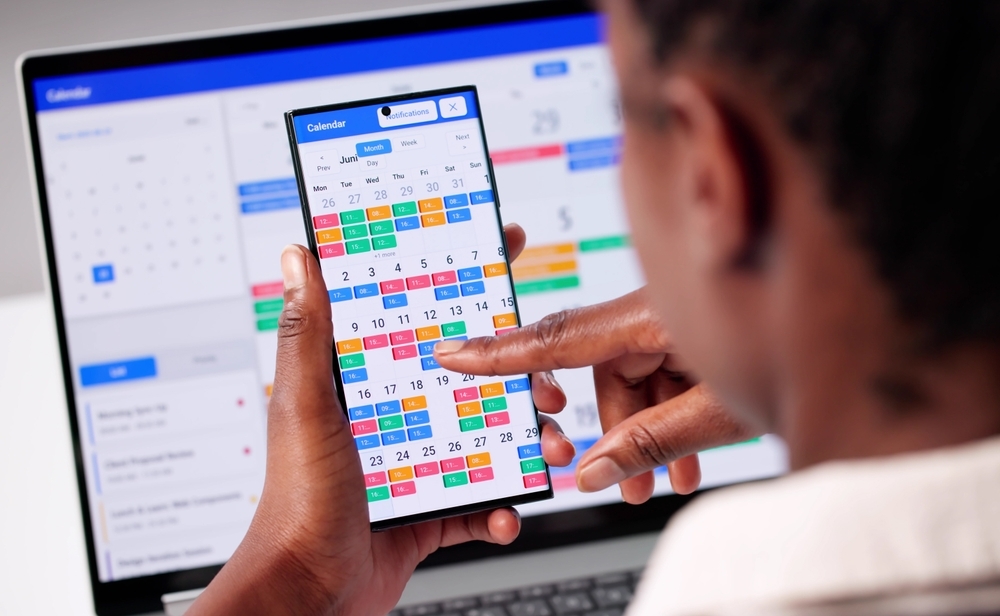
Teams running this from a spreadsheet beside an EHR tend to learn about a missed month in the following month, when the claim doesn't go. That's the same visibility problem that decides whether caseload management holds up once a panel gets big, and it shows up faster here because the reconciliation window is thirty days instead of a quarter.
The add-on codes don't run on a clock
The first thing anyone asks when sizing a team against these codes is how many minutes it takes. Here, that's the wrong question.
The codes these add-ons mirror all run on a clock. Per AAFP, general behavioral health integration under 99484 requires "at least 20 minutes of clinical staff time, directed by a physician or other qualified health care professional, per calendar month," and the collaborative care codes step up from there.
The add-ons don't carry that. CMS modelled them on those codes and left the clocks behind, and per ACP, the removal of the minute-counting requirement was the part commenters welcomed most. CMS also declined to build an add-on for 99494, the additional-30-minutes code, on the grounds that it's time based and these aren't.
So staffing this is a question about coverage and documentation, not about logging minutes. Get the rates from the fee schedule look-up before you model anything, because they're geographically adjusted and any national average you see quoted will be wrong for most practices.
None of this is a technology problem first. It's a coverage problem, and coverage is CMS's to define. But the unit of billing here is a calendar month, and a month is too short for anybody to catch a gap in a quarterly report. Something has to watch it patient by patient, every month, which is the argument for running care management on a platform built for chronic care teams rather than on a spreadsheet that only gets opened when a claim bounces.