Categories
Health Coaches

How To Shatter Goals with an Accountability Partner for Fitness

Why I Needed an Accountability Partner

Two women high-fiving during an outdoor workout, symbolizing motivation and support from an accountability partner for fitness.

Setting fitness goals is something many of us do, but sticking to them can be tough. I used to start strong and then lose motivation. Everything changed when I teamed up with an accountability partner, my daughter Alexandra.

We both wanted to improve our fitness and were committed to supporting each other. Choosing the right person was key. I needed someone with similar goals and a positive attitude, and Alexandra and I were both ready to commit. Having an accountability partner for fitness helped us both stay on track and reach milestones we might have skipped on our own.

How We Set Up Our Fitness Plan

The first thing we did was set clear, achievable goals: work out at least four times a week, track our progress, and keep each other updated regularly. We created a weekly workout schedule that included weightlifting, walking, and bodyweight exercises, plus flexibility and recovery days to stay balanced and prevent burnout.

There were tough days. We both had setbacks—injuries, travel, and schedule conflicts—but we always adjusted the plan and stayed connected. The daily check-ins made a big difference. When one of us didn’t feel like working out, the other offered encouragement or a gentle push. That partnership and shared accountability made the process sustainable and more enjoyable.

The Results—and What I Learned

After a few months, the results were clear. I felt stronger, healthier, and more confident. More importantly, I developed a consistent fitness routine. The experience wasn’t just about hitting fitness goals, it taught me about discipline, resilience, and the power of support. Sharing the wins, setbacks, and routines with someone you trust makes the journey feel less like a grind and more like a shared adventure.

If you’re struggling to meet your own goals, I highly recommend finding an accountability partner for fitness. Having someone on the journey with you changes everything.
Illustration of two flexed arms representing personal fitness progress and accountability

Try It With a Team

Looking for built-in accountability? Avidon’s group challenges make it easy to find motivation, set goals, and celebrate wins together. Whether it’s steps, workouts, or habits, our wellness app makes the process fun—and more effective.

Explore Group Challenges →

Start stronger, stay consistent, and succeed together.
Categories
Employers & HR Leaders

Employee Wellness: A Guide to a Healthier Workday

Employee Wellness: Tips for a Thriving Workplace

Maintaining physical wellness is essential for overall health and productivity, even when working in a confined space like a cubicle. While it might seem challenging to stay active and healthy in a small workspace, there are numerous strategies that can help employees incorporate physical wellness into their daily routines. This article explores various desk exercises, ergonomic practices, movement breaks, and additional tips to promote employee wellness in a cubicle or small workspace. 

Desk Exercises 
Stretching Routines 

To relieve tension and improve circulation, especially for those who sit at a desk for long hours, stretching is a simple yet effective way. Here are some easy stretches that can be done right at your workstation: 

  • Neck and Shoulder Stretches: Gently tilt your head towards one shoulder, hold for 15-30 seconds, and repeat on the other side. Roll your shoulders forward and backward to release tension. 
  • Wrist and Hand Stretches: Extend one arm in front of you with the palm facing up. Use your other hand to gently pull back on the fingers, stretching the wrist and forearm. Hold for 15-30 seconds and switch sides. 
  • Leg and Back Stretches: While seated, extend one leg out straight and reach towards your toes, holding for 15-30 seconds. For a back stretch, sit up straight and twist your torso to one side, holding onto the back of your chair for support. 
Chair Yoga 

Chair yoga is a fantastic way to incorporate gentle movement and mindfulness into your workday without leaving your desk. Here are a few simple chair yoga poses: 

  • Seated Cat-Cow Stretch: Sit up straight with your feet flat on the floor. Inhale and arch your back, lifting your chest and looking up (Cow Pose). Exhale and round your spine, tucking your chin to your chest (Cat Pose). Repeat for several breaths. 
  • Seated Forward Bend: Sit on the edge of your chair with your feet hip-width apart. Inhale and lengthen your spine, then exhale and fold forward, reaching towards the floor. Hold for a few breaths and slowly rise back up. 
  • Seated Spinal Twist: Sit up straight with your feet flat on the floor. Place your right hand on the back of your chair and your left hand on your right knee. Inhale and lengthen your spine, then exhale and twist to the right. Hold for a few breaths and repeat on the other side. 
Ergonomics 
Proper Posture 

Maintaining good posture is crucial for preventing discomfort and long-term health issues. Here are some tips for setting up an ergonomic workstation: 

  • Chair: Use a chair that supports the natural curve of your spine. Adjust the height so your feet are flat on the floor and your knees are at a 90-degree angle. 
  • Desk: Position your desk so that your elbows are at a 90-degree angle when typing. Your wrists should be straight and your hands at or slightly below elbow level. 
  • Monitor: Place your monitor at eye level, about an arm’s length away. The top of the screen should be at or just below eye level to prevent neck strain. 
Standing Desks

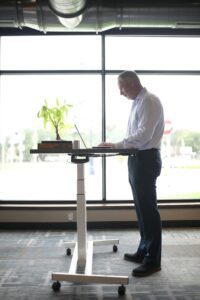
Alternating between sitting and standing can help reduce the risks associated with prolonged sitting. Here are some tips for using a standing desk in a small space: 

  • Adjustable Desk: Invest in a desk that can be easily adjusted from sitting to standing height. This allows you to switch positions throughout the day. 
  • Anti-Fatigue Mat: Use an anti-fatigue mat to reduce strain on your feet and legs while standing. 
  • Posture: Maintain good posture while standing by keeping your shoulders relaxed, your back straight, and your weight evenly distributed on both feet. 
Movement Breaks 
Regular Breaks 

Taking regular breaks to move around is essential for maintaining physical wellness. Here are some ideas for incorporating movement into your day: 

  • Pomodoro Technique: Use the Pomodoro Technique to work in focused intervals (e.g., 25 minutes) followed by short breaks (e.g., 5 minutes). During breaks, stand up, stretch, or walk around. 
  • Desk Exercises: Perform simple exercises like calf raises, seated leg lifts, or desk push-ups during breaks. 
Additional Tips 
Hydration 

Staying hydrated is crucial for overall health and can help improve focus and energy levels. Here are some tips for drinking more water throughout the day: 

  • Water Bottles: Provide employees with reusable water bottles and encourage them to keep them at their desks. 
  • Hydration Stations: Set up hydration stations with water dispensers and encourage employees to refill their bottles regularly. 
Healthy Habits 

Incorporating healthy habits into the workday can further promote physical wellness. Here are a few ideas: 

  • Walking Meetings:Encourage walking meetings instead of sitting in a conference room. This allows employees to get some fresh air and exercise while discussing work matters. 
  • Stairs: Encourage employees to take the stairs instead of the elevator whenever possible. This simple change can add more physical activity to their day.
Creating An Employee Wellness-Focused Workplace

Maintaining employee wellness in a cubicle or small workspace is entirely possible with the right strategies. By incorporating desk exercises, ergonomic practices, movement breaks, and healthy habits, employees can improve their health and productivity. Encouraging these practices not only benefits individual employees but also contributes to a healthier, more engaged workforce. Employers should support and promote these initiatives to create a positive and wellness-focused work environment. 

By integrating these tips into daily routines, employees can stay active, reduce stress, and enhance their overall well-being, even in a small workspace. Let’s make employee wellness a priority and create a healthier workplace for everyone. 

Looking to join our team? Click here for an important message