
Buyer's Guide

Health Coach Software: How to Choose the Right Platform for Your Team

If you run a coaching business or a clinic with a coaching arm, the software you pick decides two things: how many clients each coach can carry, and how many of those clients are still engaged in month three.

Health coach leading a virtual coaching session using health coach software
Quick answer: Health coach software is purpose-built technology for professional coaching teams, not a repurposed CRM or a stack of spreadsheets. The right platform combines behavior-change content, caseload management, between-session engagement, and HIPAA-compliant outcomes reporting so a growing team can coach more clients without losing results or burning out coaches.

Get the software choice wrong and you feel it as churn, coach burnout, and renewals that quietly don't happen. This guide covers what actually separates purpose-built health coach software from tools that look fine in a demo and fall apart at scale.

What Health Coach Software Actually Is.

Health coach software is technology built specifically to support the coaching relationship across a team and a caseload. It typically includes client communication, behavior-change content delivery, goal and progress tracking, caseload dashboards, and reporting you can hand to whoever funds the program.

The distinction from generic tools matters more than it sounds. In one documented case, an organization that moved to a purpose-built coaching platform cut program costs by 30% while lifting participation by 67%. The pattern is consistent: coaches spend less time on administration and more time on the work that drives outcomes.

The market is moving the same direction. According to Grand View Research, the global digital health coaching market was worth roughly $11 billion in 2024 and is projected to hit $22 billion by 2030, driven by clinics and coaching organizations adopting scalable, technology-supported models.

Health Coach Software vs. the Tools Teams Outgrow.

Most coaching teams start on tools they already have, then hit a wall as the roster grows. Here is how purpose-built software compares to the two most common stopgaps.

What you needPurpose-built health coach softwareGeneric CRM (HubSpot, Salesforce)Spreadsheets + video calls
Behavior-change contentBuilt-in, evidence-based libraryNone; you supply everythingNone
Caseload dashboardSee who's engaged and who's slippingDeal pipelines, not client engagementManual, out of date fast
Between-session engagementAutomated nudges, check-ins, assignmentsNot built for itFully manual
Outcomes reportingOne click, exportableSales metrics, not health outcomesHours of hand-entry
HIPAA compliance + BAAStandardEnterprise tier only, if at allNo
Onboarding a new coachDays, with templatesWeeks of configurationTribal knowledge

The Five Features That Actually Matter at Scale.

The strongest platforms share a foundation: structured content, individualized workflows, and reporting that proves value to whoever pays for the program. Here is what to evaluate.

Feature 1
A real behavior-change content library
Look for content grounded in cognitive behavioral frameworks, motivational interviewing, or the Transtheoretical Model, not generic wellness tips. The research consistently favors theory-based behavior-change content over unstructured advice. A strong library spans nutrition, activity, stress, sleep, and chronic-condition support, because your clients' needs rarely stay in one lane.
Feature 2
Personalized coaching workflows
Effective platforms let you build individualized journeys instead of pushing every client through the same sequence. You want customizable plans tied to each client's readiness to change, automated check-ins between sessions, and progress both coach and client can see.
Feature 3
Caseload management that scales
Carrying a large caseload without losing the personal touch is the hardest operational problem in coaching. Caseload size is a well-documented driver of coach burnout and lower client satisfaction, and the right dashboard shows your whole roster at a glance: who's engaged, who's at risk of dropping off, and who's ready for a deeper push.
Feature 4
Outcomes and reporting you can hand upward
If your coaching is paid for by a clinic, an employer, or a health plan, you will be asked to prove it works. Your software should generate clean, exportable reports on engagement, goal completion, and health-risk change without hours of manual entry. Inability to show results is one of the most common reasons programs get cut.
Feature 5
HIPAA compliance
Non-negotiable. Any platform touching client health data needs full HIPAA compliance, a signed Business Associate Agreement, encrypted storage, and access controls. Confirm this before you evaluate anything else.

Why This Matters More for Specialty Clinics Right Now.

If you run a GLP-1, metabolic, or weight-loss program, this is not abstract. The clinical results depend on what the patient does between visits, and that is exactly where patients drift. A platform that automates between-session engagement, keeps patients on protocol, and shows the clinic its own retention data is the difference between a patient who renews at month six and one who quietly disappears. The same logic holds for concierge and direct primary care practices adding a coaching tier: the software is what lets you deliver a high-touch experience without hiring a coach for every ten patients. More on that in our guide to supporting patients on GLP-1 therapy.
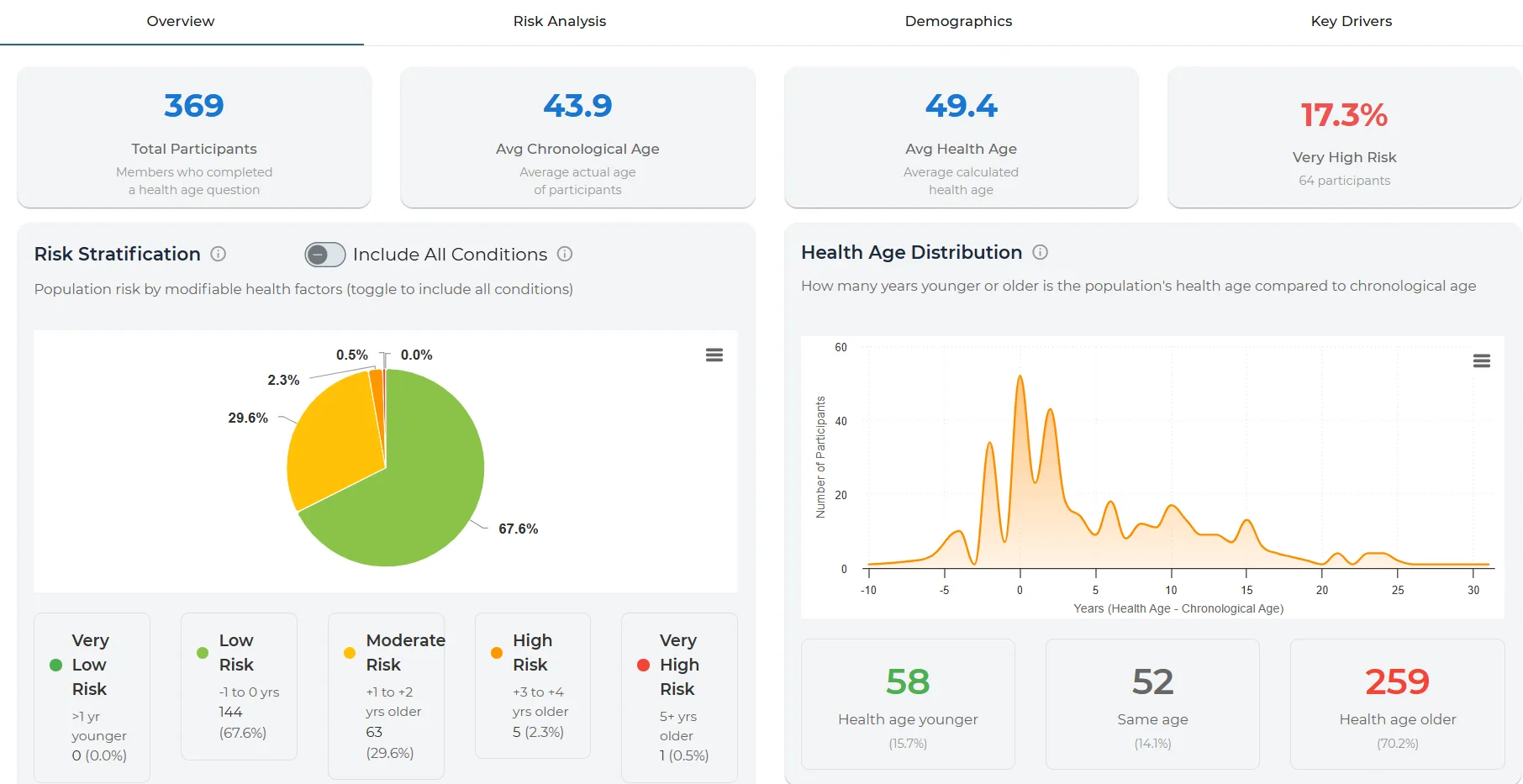
Health coach software reporting dashboard showing client engagement and outcomes data

What to Avoid.

Generic CRM or project-management tools

Salesforce, HubSpot, or Asana can be bent into managing clients, but they were not built for it. No behavior-change content, no health-specific tracking, no client-facing features. Teams using them spend far more time on admin and lose the structured content that drives results.

AI-only platforms with no human coaching layer

MIT research found 95% of organizations deploying generative AI on its own saw no measurable return. AI is great for nudges and reminders. Behavior change, especially for complex health needs, still needs a human coach. Your software should make coaches more effective, not try to replace them.

Platforms that lock your data

Some vendors make it slow or expensive to export client data when you leave. Confirm full ownership and portability before you sign. The wrong platform doesn't just underperform, it makes leaving painful.

How Avidon Was Built for Coaching Teams.

Avidon's platform was built by a professional coaching team, for coaching teams. The behavior-change content is grounded in cognitive behavioral training methodology developed in real coaching practice, not assembled by a product team that has never run a session.

112%
Improvement in program completion versus no platform support, in a controlled study of 300 non-incentivized participants.

Across 13 independent studies spanning 60,000 participants, Avidon's programs show an average 20-point blood-pressure reduction, roughly 11 pounds of weight loss, and a 4.7 out of 5.0 coaching satisfaction rating. Full methodology is in Avidon's Efficacy and Outcomes Report.

If you want to see the caseload dashboard, between-session tools, and reporting in action, that's what the health coaching platform walkthrough is for.

Frequently Asked Questions.

What coaching teams ask before choosing health coach software.

What is health coach software used for? +
It helps professional coaches manage clients at scale: delivering personalized content, tracking goals, automating check-ins between sessions, and generating outcomes reports. It replaces spreadsheets and generic tools with purpose-built workflows that cut admin time and improve results.
How is health coach software different from a wellness app? +
Wellness apps are self-guided tools for individual consumers. Health coach software is for professional coaches managing many clients, with caseload management, coaching workflows, content libraries, and reporting that consumer apps lack. The coaching relationship is central to the design.
Does health coach software need to be HIPAA compliant? +
Yes. Any platform handling client health information in a professional context must be HIPAA compliant, including encrypted storage, access controls, and a signed BAA with the vendor. Confirm this before evaluating other features.
How much does health coach software cost? +
Most platforms price per member per month, typically $2 to $15 PMPM depending on content, coaching support, and reporting. Ask specifically about implementation costs and data-export fees, which are where surprise costs hide.
What happens when clients stop engaging between sessions? +
Between-session drop-off is one of the biggest challenges in coaching. Look for platforms that automate engagement touchpoints, so the program keeps moving when you are not in a live session. Good software turns between-session engagement from a manual chore into a built-in feature.
Can health coach software support a GLP-1 or metabolic program? +
Yes, and it is one of the strongest use cases. GLP-1 and metabolic outcomes depend on what patients do between visits, which is exactly where they tend to drift. Software that automates between-session engagement, keeps patients on protocol, and reports retention back to the clinic helps convert short-term prescriptions into sustained results.
How long should it take to onboard a new coach? +
With a purpose-built platform and prebuilt templates, days, not weeks. If a vendor quotes weeks of configuration before a coach can take clients, treat that as a cost.

See What Purpose-Built Coaching Software Does.

Start with the Efficacy and Outcomes Report for the data and methodology, or book a walkthrough of the platform for your team.

Author

  • The Avidon Health logo.

    Avidon Health is transforming how organizations promote healthier lifestyles through behavior change science and technology-driven coaching. Our mission is to empower individuals to achieve better health outcomes while driving measurable business success for our clients.

    With over 20 years of expertise in health coaching and cognitive behavioral training, we’ve built a platform that delivers personalized, 1-to-1 well-being experiences at scale.

    Today, organizations use Avidon to reimagine engagement, enhance health, and create lasting behavior change—making wellness more accessible, impactful, and results-driven.

Looking to join our team? Click here for an important message