Categories
Health Coaches

When “Super Thin” Comes Back In — The Stronger Way Forward

Strength & Resilience

When “Super Thin” Comes Back In — The Stronger Way Forward

Skeleton-thin silhouettes returned to the red carpet in 2026, and old body image anxieties followed. Here’s what that means for employees—and what strengths-based coaching offers instead.
Confident woman at work representing body image resilience and strengths-based health coaching
When extreme thinness trends return, they do not stay on the red carpet. They resurface in workplace confidence, focus, and well-being. Strengths-based health coaching gives employees a grounded alternative rooted in their own values, not a trend cycle.

I remember the 1990s well. Kate Moss was everywhere. Heroin chic was not just a look. It was the goal. We pushed carrots around our plates and found excuses to miss dinner. Not because we were busy, but because eating felt like quitting.

I learned the hard way what that kind of thinking costs. And I have spent the years since helping others find a different path.

So when skeleton-thin silhouettes returned to the red carpet in 2026, after years of “Strong is the New Skinny” messaging, I was not surprised by what followed. I heard it in coaching sessions. I saw it in the questions people were asking. Old beliefs that many women thought they had outgrown quietly resurfaced.

This is not a phase we left behind. It is a pattern. And it shows up at work.

Body Image Does Not Clock Out.

The cultural messages women absorb about their bodies do not disappear when they walk into the office. According to the National Organization for Women, 53% of American girls are unhappy with their bodies by age 13, a number that climbs to 78% by age 17. Those beliefs follow women into adulthood, into careers, into every environment where they are being seen and evaluated.

34%
of adults feel anxious because of their body image—and 35% feel depressed—according to the Mental Health Foundation.

Those feelings do not stay at home when the workday starts. In the workplace, that can look like:

  • Difficulty concentrating when a trend cycle reactivates old anxieties
  • Decreased confidence in high-visibility situations
  • Energy spent on food and appearance concerns that could go toward performance
  • Withdrawal from social situations like team lunches or work events

These are not personal failings. They are predictable responses to cultural pressure, and they have real costs for employees and organizations alike.

What Health Coaching Actually Does Here.

Strengths-based health coaching does not focus on weight or appearance. It focuses on capability: what someone wants to be able to do, feel, and sustain over time.

The questions coaching asks look different from what most wellness programs offer:

  • What matters to you now, and in 10 years?
  • How do you want to feel in your body and your life?
  • What supports your energy, confidence, and resilience?
  • What habits actually fit your real life, not a trend?

That reframe matters. When the cultural noise gets loud, coaching gives employees a grounded alternative, one rooted in their own values, not a red carpet moment.

At Avidon Health, our coaches are trained in cognitive behavioral techniques that help people recognize the thought patterns behind these responses and build new ones. It is not about fixing how someone looks. It is about building the kind of self-trust that does not depend on what is trending.

A Different Measure of Health.

The metric that actually moves the needle is not a number on a scale. It is whether someone feels capable, resilient, and confident enough to show up fully—at home, at work, in their own life.

That is what sustainable health looks like. And it is what coaching is built to support.

If today’s trends are stirring something up for you or someone on your team, that is worth paying attention to. Health coaching can help, and no one has to figure it out alone.

Ready to Build a More Resilient Workforce?

Avidon’s coaching is built to meet employees where they are, with tools grounded in behavior change science, not trends.

Categories
Health Coaches

Beat Burnout and Find Flow: My Goldilocks Goal Story

Stress, Flow, and Finding Balance

Stress is a balancing act. Too much, and I feel overwhelmed and suffer burnout. Too little, and I fall into boredom and disengagement. I’ve found that sweet spot, where I feel energized and motivated, is when I’m in a state of flow. That’s the outcome I strive for in my own life and what I encourage through my corporate wellness coaching.

Enter the Goldilocks Goal

This is where Goldilocks goals come in. They’re not too easy, not too hard, but just right. Designed to challenge without overwhelming, they’re powerful tools for finding flow in your health, work, or personal life.

When you’re setting a Goldilocks goal, make sure it checks these boxes:


  • Challenging enough to stay engaging

  • Achievable based on your current skills and resources

  • Specific and clear, with a defined measure of success

  • Time-bound, giving structure and urgency

These elements create the ideal conditions for entering that fully-immersed, high-performance state where everything just clicks.


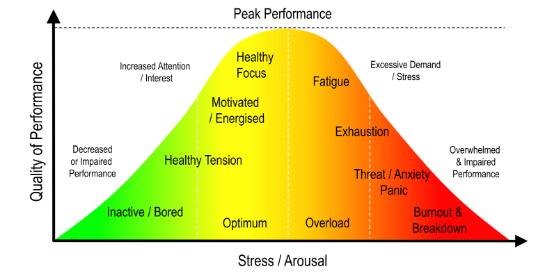
The Science Behind It: The Yerkes-Dodson Law

Yerkes-Dodson stress curve used in corporate wellness coaching to illustrate peak performance at moderate stress levels

This curve illustrates how performance improves with increased stress up to a point—but then drops sharply when stress becomes excessive. Goldilocks goals are designed to keep you in that sweet spot of healthy tension and sustainable motivation.

My Story: From Complacency to Flow

I found myself in a state of complacency, not unhappy, but under-challenged. I wanted to feel more impactful in my work, but I didn’t want to upend my life. With two kids in school, a packed sports schedule, a new puppy, and a demanding fitness and coaching routine, time was tight.

So I set a Goldilocks goal: go back to “school” for additional learning, accreditations, and certifications. It was a challenge I didn’t have to take on, but I wanted to. It stretched me just enough to reignite my motivation.

Night classes and study groups were tough, but being part of a learning community and getting feedback helped me tap into a growth mindset. I surrounded myself with like-minded people: on my team at work and in my learning cohort. With support from my family, coworkers, and employer, I not only completed my goal—I enjoyed the process and found flow again.

Illustration of a cheerful Goldilocks reading a book, symbolizing balance and learning in goal setting

Set Your Own Goldilocks Goal

If you’re feeling bored, burnt out, or unmotivated in your work, fitness, or daily routine, try these five steps:

  1. 🧠 Assess your current skill level: Be honest about your strengths and areas for growth.

  2. 🎯 Choose a goal just beyond your comfort zone: It should stretch you, but not break you.

  3. 🪜 Break it down: Divide it into small, manageable steps to build momentum.

  4. 🔁 Track progress and adjust: If it feels too easy or too hard, tweak it. Flow is flexible.

  5. 🎉 Celebrate small wins: Progress fuels motivation and prevents burnout.

Your Turn

What’s one thing you’ve been putting off because it felt too small or too big? Reframe it. Shrink it. Stretch it. Shape it into a Goldilocks goal: one that challenges you just enough to spark growth, without overwhelming your life?

FAQs: Finding Your Just-Right Fit

Absolutely. Goldilocks goals are a perfect fit for corporate wellness coaching because they help employees stay engaged, avoid burnout, and grow without becoming overwhelmed. Whether you're guiding a team or setting personal goals, this approach encourages sustainable progress.

Start by identifying what feels missing—energy, impact, creativity, focus. Choose something that nudges you in that direction. Corporate wellness coaching often starts here too: uncovering what matters most to you and using that to spark meaningful progress.

If it doesn’t require a little discomfort, it’s probably too easy. If it’s keeping you up at night, it’s likely too big. A good Goldilocks goal sits in that middle space. It stretches you, but still feels doable with effort and support.

Categories
Employers & HR Leaders

Why an Employee Wellness Coach Is the Missing Piece in Your Weight Loss Program

Lasting Weight Loss: The Impact of Health Coaching in Employee Wellness Programs vs. Going Solo

Most employee weight loss programs produce short-term results and long-term frustration. The difference between employees who achieve lasting change and those who don’t often comes down to one thing: access to a dedicated employee wellness coach. Unlike generic wellness apps or one-size-fits-all programs, a skilled coach provides the personalized accountability, behavioral support, and holistic guidance that turns good intentions into sustainable results.

When considering your Employee Wellness Program, ask yourself – do you know anyone who has managed to lose a significant amount of weight and keep it off? What separates them from those who lose weight but gain it back? The key to long-term weight loss goes beyond eating less and moving more. It involves emotional and social wellness, a mindset shift, and having proper support. This is where a health coach can play a pivotal role.

The Role of Health Coaching in Weight Loss

Health coaching involves a trained professional working with clients to help them achieve their personal health and well-being goals. This personalized approach includes identifying areas for improvement, readiness for change, finding their “why,” setting realistic goals, creating customized plans, and providing ongoing support and accountability. Health coaches use techniques like motivational interviewing, goal setting, and behavior modification to help clients make sustainable lifestyle changes.

Achieving and maintaining long-term weight loss is a significant challenge for many individuals. With the popularity of GLP-1 agonist medications used for weight loss, it is more important than ever to consider the long haul. Specifically, as it relates to maintaining strength and muscle mass while dieting and maintaining long-term behavior change. Whether medications are used to lose the weight or not, the support of a health coach can make a huge difference in helping your employees keep the weight off for a lifetime, versus going at it alone.

Benefits of Health Coaching for Long-Term Weight Loss 
Personalized Approach
  • Health coaches allow their clients to be the “CEO” of their own lives, and tailor their strategies to the specific needs, preferences, and circumstances of each client. This personalized approach ensures that the goals and strategies are the clients “own,” so the guidance provided is relevant and practical, increasing the likelihood of successful outcomes. 

Holistic Health 
  • Health coaching addresses all aspects of health and wellness, including physical, mental, spiritual, social, occupational and emotional well-being. This holistic approach ensures that clients receive comprehensive support, helping them achieve overall wellness rather than just focusing on weight loss since often these factors impact each other. 
Empowerment Enhanced Self-Efficacy 
  • Empowerment is a key element of effective health coaching. By fostering a sense of ownership and control over their health journey, coaches help clients build confidence in their ability to make small, positive changes over time. Empowered clients have more self-efficacy, or belief in their ability to achieve their goals. This increased self-efficacy can lead to greater adherence to health recommendations and more successful outcomes. They are more likely to take proactive steps towards their goals, maintain motivation, and overcome obstacles. 
Accountability and Motivation 
  • Goals become more “real” when commitments are made to an accountability partner. Regular check-ins with a health coach provide clients with the accountability and motivation they need to stay committed to their goals. Knowing that someone is there to support and encourage them can make a significant difference in achieving and maintaining healthy habits. 
Behavioral Changes 
  • Health coaching focuses on making sustainable lifestyle changes rather than quick fixes. Coaches help clients develop healthy habits and behaviors that can be maintained long-term, leading to lasting health improvements. 
Improved Health Outcomes 
  • Research has shown that health coaching can lead to significant improvements in various health outcomes. For example, individuals who participate in health coaching programs often experience reductions in blood pressure, cholesterol levels, and body weight. These improvements can lead to a lower risk of chronic diseases and better overall health. 
Stress Management 
  • Health coaches are equipped to help clients manage stress effectively. Through techniques such as mindfulness, relaxation exercises, and time management strategies, coaches help clients reduce stress and improve their overall well-being. 
Support for Chronic Conditions 
  • For individuals managing chronic conditions, health coaching can provide invaluable support. Coaches help clients understand their condition, develop effective management strategies, and navigate the healthcare system. This support can lead to better disease management, fewer complications, and an improved quality of life. 
Increased Engagement in Health 
  • One-on-one health coaching encourages clients to take an active role in their health. By involving clients in the goal-setting and decision-making process, coaches foster a sense of ownership and engagement in their wellness journey. 

So, while it’s possible to achieve long-term weight loss without health coaching, it often presents more challenges. Individuals who attempt self-guided weight loss frequently experience these limitations:

  • Self-Reliance: Relying solely on self-guided programs.
  • Limited Focus: Focusing on diet and exercise alone, neglecting holistic well-being. 
  • Behavioral Challenges: Struggling to implement and maintain sustainable lifestyle changes.

Not surprisingly, studies have shown that health coaching can significantly enhance weight loss efforts: Health Coaching

  • Greater Weight Loss: Participants who received health coaching lost more weight compared to those who did not. For example, one study found that individuals with health coaching lost more than 9% of their body weight over 24 weeks. 
  • Sustained Results: Health coaching helps maintain weight loss over the long term. A study showed that digital lifestyle coaching led to significant weight loss maintained over 12 months, with participants losing an average of nearly 10 lbs. (4.5 kg) compared to 3.3 lbs. (1.5 kg) in the control group.  
  • Behavioral Changes: Health coaching supports the development of healthier habits and behaviors, which are crucial for long-term weight management. 

Without the support of a health coach, your employees may find it challenging to make lasting behavioral changes. Quick fixes and fad diets often lead to temporary results, but sustainable weight loss requires a comprehensive approach that addresses underlying motivations, habits and behaviors. 

Conclusion: 

While it is possible to achieve long-term weight loss without health coaching, the support and guidance of a health coach can significantly enhance the likelihood of success. Health coaching offers a personalized, holistic approach that empowers clients, provides accountability, and fosters sustainable lifestyle changes. When crafting an effective Employee Wellness Program, consider those who are serious about achieving and maintaining long-term weight loss, and invest in health coaching. 

Learn more about health coaching for employees and how it supports long-term wellness outcomes.

Looking to join our team? Click here for an important message