You like your social life. You like your friends. You probably like the taste of your favorite drink. But you don’t love:
- The foggy mornings
- The anxiety that hits the next day (did I really say that?)
- The feeling that you blew past your “just one drink” internal plan
Maybe you’ve thought, “I don’t want to quit completely. I just want to drink less and still have a social life.” That’s an achievable goal. You don’t have to choose between “all in” and “never again” to make meaningful changes.
Here are practical ways to drink less without feeling like you have to stay home or explain yourself to everyone.
Step 1: Get honest about your motivation and goals
Before you change anything, it helps to know what you’re changing for. Your “why” might be:
- Better sleep and more energy
- Less morning after anxiety or brain fog
- Saving money — drinks are expensive
- Weight or health goals
- Wanting to be more present for your kids
You don’t have to share this with anyone, but having a clear reason helps you stay steady when you’re tempted to slip into old habits.
You can even write it down in one sentence:
“I want to drink less because ____________.”
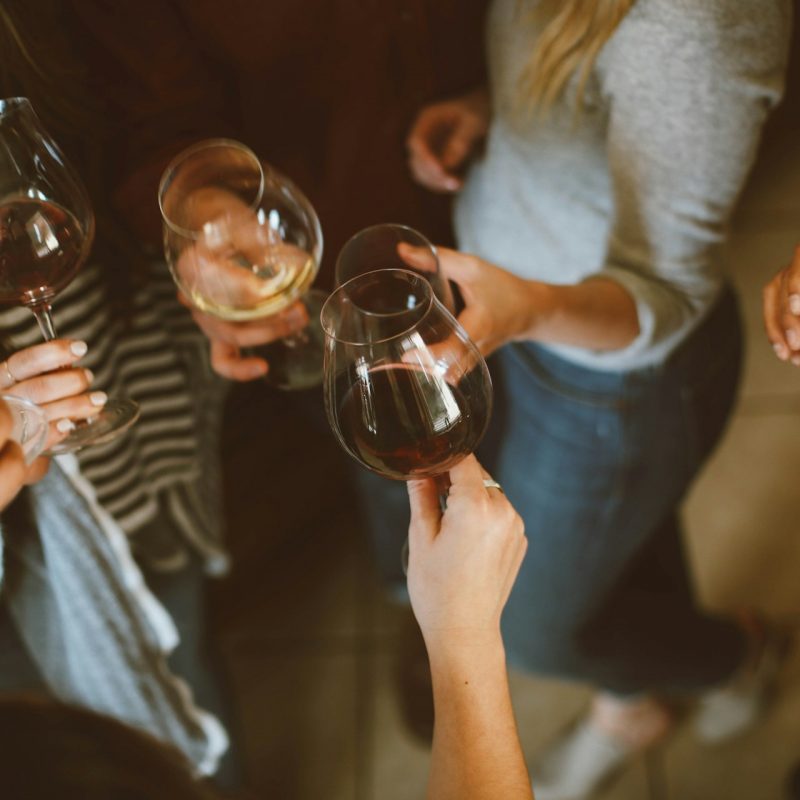
Step 2: Make a simple plan before you go out
Last-minute decisions in loud, social environments rarely go the way you hope. A short, realistic plan gives you something to anchor to.
Before you go out, decide:
- How many drinks you’re comfortable having (for example, “Max 2”)
- How you’ll pace them (like one drink per hour)
- What you’ll drink in between (water, soda, mocktail)
You’re not signing a legal contract. You’re giving your future self a bit of support.
Step 3: Use the “one for fun, one for support” rule
Alternate between an alcoholic drink and a non-alcoholic one. This helps you:
- Stay hydrated
- Slow your drinking
- Still be an active participant in the festivities
You can order:
- Tonic water with lime (it tastes like a drink you want to enjoy slowly)
- A mocktail
- Soda or juice in a cocktail glass
Having something in your hand often matters more socially than what’s actually in the glass.
Step 4: Have one or two simple scripts ready
One reason people overdrink is social pressure or fear of awkwardness. Having a few phrases ready makes it easier to protect your decision without making it a big deal.
Try:
- “I’m good for now, thanks.”
- “I’m taking it easy tonight.”
- “I’m focusing on getting better sleep.”
You don’t owe anyone a long explanation. If someone pushes, you can repeat yourself, change the subject, or step away.
Step 5: Notice your patterns, no shaming necessary
Instead of judging each night as “good” or “bad,” get curious:
- Are there particular people, places, or feelings that make you drink more than you planned?
- Are there nights where it was easy to stick to your limits? What was different?
This kind of awareness is powerful. It helps you design your social life in a way that supports you. Think of it as combining brainpower and willpower.
Step 6: Have a plan for “more than I meant to”
You will have nights when you drink more than planned. That doesn’t mean you failed or should give up. It just means you’re human. Definitely don’t go into a shame loop and end up drinking more the next night because of it.
The morning after, instead of attacking yourself, try:
- Drinking extra water and getting some gentle movement in
- Doing a quick check-in: “What led to that? What might I try differently next time?”
- Returning to your original goal for the next outing, not starting over from zero
Change sticks better when you respond with accountability and compassion, not punishment.

Step 7: Build a life that doesn’t revolve around alcohol
Over time, consider adding more plans that aren’t centered on drinking at all:
- Coffee and snacks with friends at a café
- Brunches, hikes, fitness classes
- Game nights, movie nights, or creative activities
If socializing always equals drinking, it will be harder to change. When you broaden what “fun” looks like, drinking becomes an accessory, not the main event.
If you’d like a little help staying on track
Cutting back is easier when you can see your progress and have gentle support along the way. Keeping track of how you feel, what you drink, and which strategies work for you can turn this from a vague goal into a real, sustainable shift.
Avidon offers digital coaching tools and check-ins that can help you do exactly that, without judgment, just guidance. If you’d like to explore whether it supports your goals, you can start here: Find out how Avidon supports alcohol reduction.
Disclaimer: This article is intended for individuals interested in reducing alcohol use. If you feel your drinking is becoming hard to manage, seek support from a healthcare professional or a trusted resource.
Author

Avidon Health is transforming how organizations promote healthier lifestyles through behavior change science and technology-driven coaching. Our mission is to empower individuals to achieve better health outcomes while driving measurable business success for our clients.
With over 20 years of expertise in health coaching and cognitive behavioral training, we’ve built a platform that delivers personalized, 1-to-1 well-being experiences at scale.
Today, organizations use Avidon to reimagine engagement, enhance health, and create lasting behavior change—making wellness more accessible, impactful, and results-driven.