10 Wellness Myths Busted (and What Actually Works)
When was the last time you challenged what you think you know about employee wellness? Our co-founders sat down for a candid, unscripted conversation about the most common workplace wellness myths they see.
Watch the Full Conversation.
What started as a casual dialogue quickly turned into a rapid-fire myth-busting session, complete with laughs, a few hot takes, and some serious truth-telling.
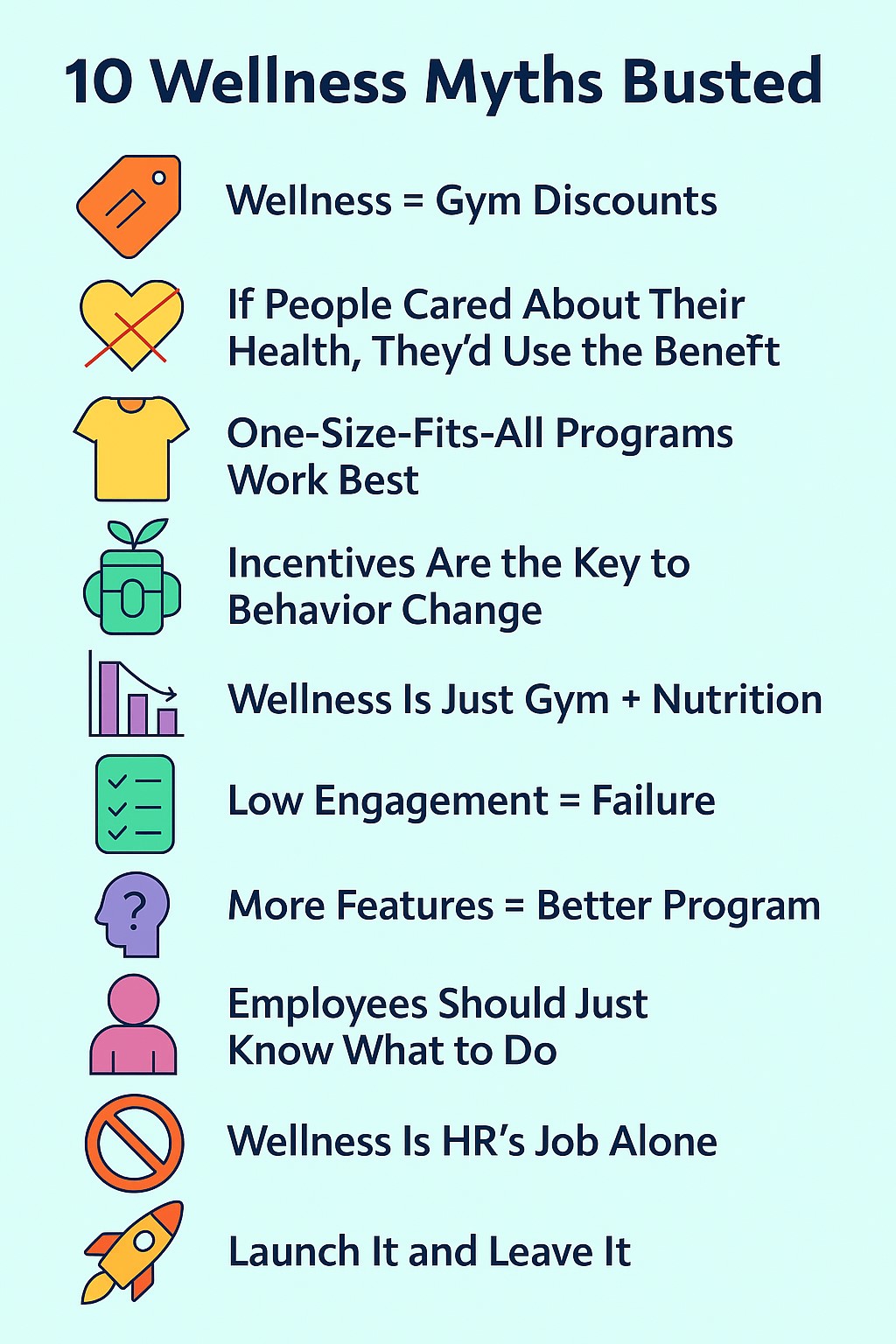
Watch the full video hereShort on time? We've distilled their conversation into a bite-sized list, perfect for a quick break over a hot beverage. It's straight to the point and packed with real insights every HR leader and business owner should know. Now let's go!
The Myths.
Wellness = Gym Discounts
It's the classic move: offer employees a gym discount and check the wellness box. But here's the problem, it rarely works.
As Tim pointed out: "If 30,000 people actually showed up to a Planet Fitness on a Tuesday night, the system would collapse." These low-cost gym models often rely on people not showing up.
If People Cared About Their Health, They'd Use the Benefit
We love this quote from the conversation:
"You're probably already spending money on weight-loss things, gadgets, plans... so why aren't you using your employer benefit?"
Because care doesn't equal clarity. People may want to get healthier but feel overwhelmed, ashamed, or simply confused by what's offered.
One-Size-Fits-All Programs Work Best
Cookie-cutter programs might check all the "compliance" boxes, but they rarely change lives. What works for your corporate office may fall flat with your night-shift warehouse crew.
Incentives Are the Key to Behavior Change
While rewards can kickstart engagement, they don't lead to long-term transformation.
Wellness Is Just Gym Plus Nutrition
Far too many programs are built around calories and cardio. But that's only scratching the surface.

Low Engagement = Failure
If few people sign up, it must not be working... right? Not necessarily.
More Features = Better Program
Clark joked about "stacking features" like that makes the program more appealing. But more isn't always better.
Employees Should Just Know What to Do
"Wellness" is a deeply personal journey, but most people aren't experts in behavior change or health psychology.
Wellness Is HR's Job Alone
Sure, HR may spearhead the initiative, but it's not theirs to own alone.
Launch It and Leave It
You stood up a program, sent the email, and... nothing. That's because wellness isn't "set it and forget it."
Final Thoughts.
Beneath all these myths is one powerful truth: Workplace wellness is a performance strategy.
The best companies know this. They don't treat wellness as a checkbox, but as a core pillar of retention, culture, and long-term growth.
If you recognized even one of these myths in your own organization, you're not alone. But you are in a powerful position to change the narrative.