
Workforce Well-Being

Protecting Outdoor and Warehouse Workers from Extreme Heat: An HR Playbook

Heat is now the deadliest weather hazard on the job, and a federal standard is on the way. Here's what actually protects outdoor, warehouse, and field teams, and how to build it before the next heat wave.

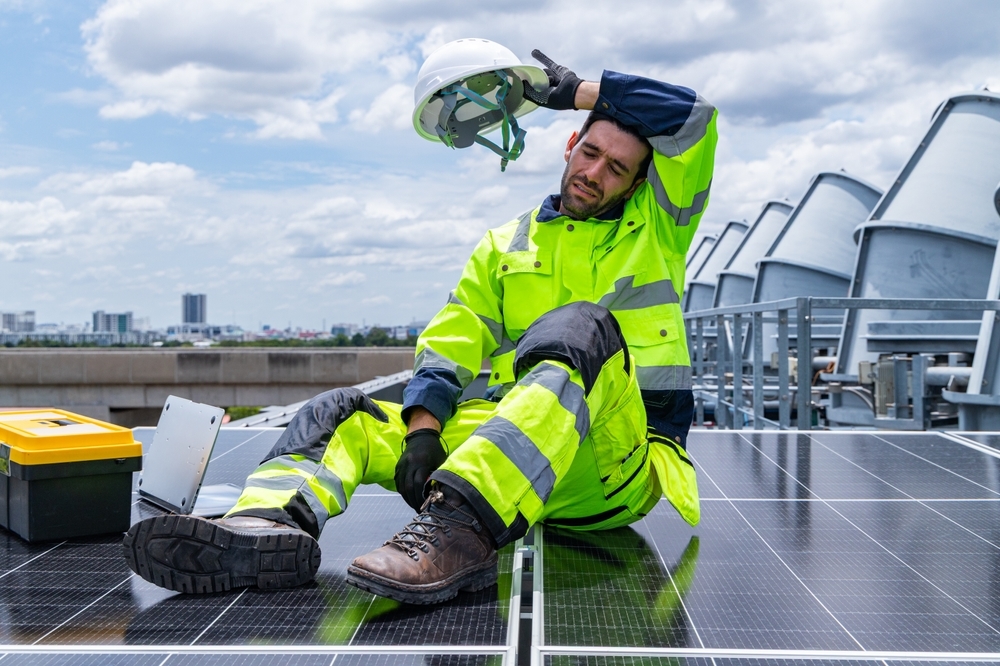
Outdoor worker in high-visibility gear laboring in extreme heat on a job site
Quick answer: Protecting workers from extreme heat means giving them water, rest, shade, and time to acclimatize, then backing it with a written plan and trained supervisors. The employers who get this right treat heat as a scheduled operational risk, not a summer afterthought, and they build the plan before temperatures climb, not during the first emergency.

Extreme heat is the leading cause of weather-related death for U.S. workers, and it costs employers long before anyone collapses. According to the Atlantic Council's Adrienne Arsht-Rockefeller Foundation Resilience Center, heat already drains an estimated $100 billion a year in U.S. labor productivity, a figure projected to reach $200 billion by 2030. For any employer with people working outdoors, in warehouses, or in un-conditioned plants, this is a bottom-line issue, not just a safety one.

This piece stays on one thing: the heat and thermal-safety playbook. For the broader question of reaching workers who never sit at a desk, see our guide to frontline employee wellness, and for the factory-floor context specifically, our breakdown of blue-collar wellness programs.

Why Heat Is a Bigger Risk Than Most Employers Think.

Heat quietly does two kinds of damage: it hurts people, and it drags on output. Both are larger than the headlines suggest.

On the human side, the Bureau of Labor Statistics recorded 479 worker deaths from environmental heat exposure between 2011 and 2022, plus roughly 34,000 heat-related injuries and illnesses serious enough to miss work. Safety researchers widely consider these numbers an undercount because heat often goes unrecorded as the cause.

A 2025 analysis from the George Washington University Milken Institute School of Public Health makes that gap concrete: it links nearly 28,000 workplace injuries every year to hot weather, most never logged as heat-related at all. Heat doesn't just cause heat stroke. It makes hands slower and judgment worse, which turns into falls, equipment errors, and other "ordinary" injuries.

The risk is not evenly shared. Construction workers are nearly four times more likely to die from heat exposure than workers in other industries, and the lowest-paid workers experience roughly five times as many heat injuries as the highest-paid. The people most exposed are often the least protected.

The Productivity Cost You're Already Paying.

Even when no one gets hurt, heat is expensive. Work simply slows down when bodies overheat.

Exposure to temperatures above 85°F leads workers to cut about an hour off their effective workday compared with milder conditions in the 76-80°F range, according to economic research summarized by the U.S. Joint Economic Committee. In labor-intensive manufacturing, output drops an estimated 4% for every degree above 80°F.

$100B
Estimated annual U.S. labor-productivity loss from heat, projected to double to $200 billion by 2030.

That is why the national figure matters at the company level. Heat shows up as slower throughput, more mistakes, more sick days, and higher turnover, all of which compound the same way other unhealthy habits quietly raise costs at work. Treating heat as a productivity variable, not just a safety checkbox, tends to unlock the budget to actually fix it.

What OSHA's Proposed Heat Rule Will Require.

For decades there was no federal heat standard. That is changing, and employers who prepare now will not be scrambling later.

In August 2024, OSHA published a proposed Heat Injury and Illness Prevention standard covering both indoor and outdoor work, and it held public hearings through mid-2025. Even before it is final, it is the clearest blueprint available for what "reasonable" heat protection looks like, and OSHA can already cite employers under the General Duty Clause.

The proposal is built around two temperature triggers, measured by heat index:

Initial Heat Trigger — 80°F
Provide cool drinking water (at least one quart per employee per hour), shaded or air-conditioned break areas, paid rest breaks as needed, an acclimatization plan for new and returning workers, and a clear way to communicate in the heat.
High-Heat Trigger — 90°F
Add mandatory paid rest breaks of at least 15 minutes every two hours, active monitoring for symptoms of heat illness, and hazard alerts to the crew.

The through-line is that protection scales with the temperature, and most of it has to be written down and paid for, not left to individual judgment on a hot afternoon.

The Five Moves That Actually Protect Workers.

The science of heat safety is settled and refreshingly practical. Five moves do most of the work.

Move 1
Water, rest, shade, made automatic.
OSHA's long-standing Water. Rest. Shade. guidance still holds: cool water within easy reach, scheduled breaks that don't require permission, and real shade or cooling near the work. If a worker has to ask, many won't.
Move 2
Acclimatize new and returning workers.
OSHA has found that most heat-related deaths occur in a worker's first few days on the job, before the body adapts. Ramp new hires up gradually, starting at about 20% of the normal heat workload on day one and building over roughly a week. Apply the same ramp to anyone back from two or more weeks away.
Move 3
Schedule around the heat, not through it.
Move the hardest physical work to early morning, rotate crews through hot zones, and build in more frequent breaks as the heat index climbs. This is the same shift-aware thinking that drives our guide to shift-worker wellness, applied to temperature.
Move 4
Train supervisors and use the buddy system.
Frontline leads need to recognize the early signs of heat exhaustion, cramping, confusion, nausea, and to act without waiting. Pairing workers so they watch each other catches trouble faster than any policy memo.
Move 5
Write the plan and name an owner.
A one-page heat action plan, posted where crews actually are and assigned to a specific person, converts good intentions into a repeatable response. The plan should spell out the triggers, the breaks, the water logistics, and exactly what to do when someone shows symptoms.

Reaching Workers Who Aren't at a Desk.

A heat plan only works if it reaches the people in the heat, and those people rarely have a company email or a lunch-hour to spare. The delivery has to fit the job.

Short, mobile-first prompts work far better than portals or newsletters: a text reminder to hydrate before a shift, a 30-second audio refresher on heat-illness signs, a quick check-in during a break. Pairing these with on-site toolbox talks and peer champions covers both the worker who lives on their phone and the one who rarely looks at one. That is exactly the gap wellness that reaches every shift is built to close.

When the delivery fits the job, people engage. In a controlled Avidon study of 300 non-incentivized participants, program completion climbed from 17% with no coaching to 36% with coaching plus technology, a 112% improvement, detailed in our efficacy and outcomes report. The same principle carries straight over to heat safety: the guidance only works when it reaches workers in the format and rhythm of their actual day.

Done well, heat safety becomes part of the daily rhythm rather than a poster nobody reads. That is the difference between a compliance document and a workforce that actually stays safe and productive through the summer.

Frequently Asked Questions.

Common questions about protecting workers from extreme heat.

What temperature is unsafe to work in? +
Risk rises sharply once the heat index reaches about 80°F, and it becomes serious at 90°F and above. OSHA's proposed standard uses those two points as triggers for specific protections, but humidity, sun exposure, physical exertion, and clothing all shift the real risk, so the heat index matters more than the raw temperature.
Does OSHA have a heat standard for employers? +
There is no final federal heat standard yet, but OSHA proposed a Heat Injury and Illness Prevention rule in 2024 that is moving through rulemaking. In the meantime, OSHA can cite employers for heat hazards under the General Duty Clause, so waiting for the final rule is not a safe compliance strategy.
What should a workplace heat action plan include? +
A strong plan names the heat-index triggers, guarantees water and paid rest breaks, designates shaded or cooled break areas, sets an acclimatization schedule for new and returning workers, trains supervisors to spot symptoms, and assigns one owner responsible for running it. Post it where crews can see it.
How do you protect indoor workers from heat? +
Warehouses, kitchens, and plants can be as dangerous as any job site. Use fans and cooling where possible, provide water and rest breaks on the same triggers, monitor the indoor heat index rather than the outdoor forecast, and acclimatize workers to hot areas just as you would outdoors.
Why does heat lower productivity even when no one gets sick? +
Heat degrades both fine motor control and decision-making, so work slows and errors rise well before anyone reports feeling ill. Research links temperatures above 85°F to roughly an hour of lost effective work per day, which is why heat carries a large productivity cost independent of injuries.

Build a Heat Plan Your Whole Workforce Can Actually Use

Avidon Health helps employers deliver wellness and safety support that reaches every shift and every role, built for the device in a worker's pocket, not a desk they'll never sit at.

Author

  • The Avidon Health logo.

    Avidon Health is transforming how organizations promote healthier lifestyles through behavior change science and technology-driven coaching. Our mission is to empower individuals to achieve better health outcomes while driving measurable business success for our clients.

    With over 20 years of expertise in health coaching and cognitive behavioral training, we’ve built a platform that delivers personalized, 1-to-1 well-being experiences at scale.

    Today, organizations use Avidon to reimagine engagement, enhance health, and create lasting behavior change—making wellness more accessible, impactful, and results-driven.

Looking to join our team? Click here for an important message