Common Questions About Substance Use Recovery
How do I take back control if I feel dependent on alcohol or other substances?
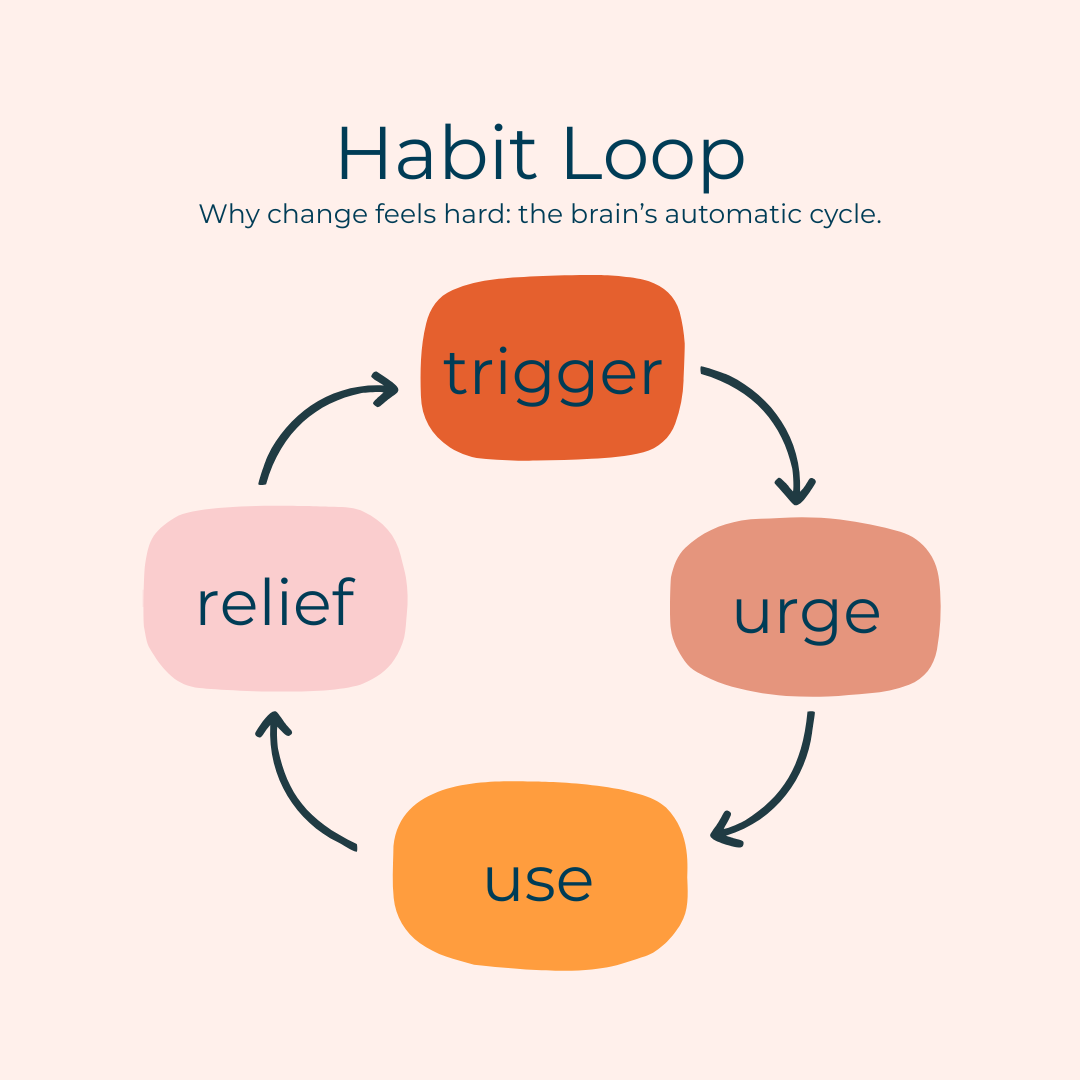
You’ve already begun taking back control, even if it doesn’t feel like it yet. Your first small win is simple: pause. When you feel the urge to use, stop for a moment and breathe. You aren’t trying to quit the entire future, just this one moment. Shift your environment, get water, call someone, or step outside. Every pause breaks the automatic routine that keeps the cycle moving. If the pull feels strong, talk to someone you trust or a professional . support is never weakness, it’s strategy. Little wins stack up. Control comes back piece by piece, not all at once.
What steps help me break the cycle of using substances to cope with stress?
Start by spotting the pattern: stress → urge → use → temporary relief → regret → increased stress.
Here’s how to break it:
• Be aware of what stress feels like and what can amplify it
• Step out of the environment you normally use in
• Do a “stress swap”: short walk, breathing exercise, music, journaling, or talking to someone
• Use the same swap every time so it becomes your new routine
• Track which swaps work best so you can rely on them when stress spikes
You’re not fighting the cycle. You’re changing it.
How can I manage cravings without relying only on willpower?
Cravings can drain willpower fast, so use some strategy to help:
• Change your environment (stand up, go outside, switch rooms)
• Change what your hands are doing (stress ball, fidget, water bottle)
• Change what’s in your mouth (gum, mints, cold water)
• Label the urge: “This is a craving, not a command”
• Ride it out for five minutes because cravings peak and fade quickly
You’re not battling the craving. You’re outlasting it.
What positive habits support long-term recovery?
Build consistent habits with an eye toward stress reduction and personal growth:
• Set a simple sleep routine
• Eat regular balanced meals so your blood sugar stays steady
• Move your body daily, even if it’s just a short walk. The endorphins help take the edge off
• Stay connected to one or two supportive people
• Keep mornings predictable and evenings calm
• Limit high-risk environments and high-risk friends for as long as you need.
Recovery builds through repetition, and is sustained by repetition.
Further Reading
How do I set healthy recovery boundaries with friends and family?
Be clear and brief: “No, thank you,” I’m not drinking right now,” “I’m staying away from that stuff,” or “I’m focused on my health.” You don’t need a speech, and you don’t need to convince anyone. If people push, repeat yourself once and either change the subject or leave.
If someone keeps questioning your choices, pay attention to that. It’s a sign they may not support the path you’re on, and that can make recovery harder. People who don’t respect your boundaries are more likely to pull you back into the lifestyle you’re trying to leave. Boundaries aren’t about controlling others. They create a safe distance from what could pull you back, and open room for the relationships that truly help you move forward.
Further Reading
How do I rebuild trust with myself after a relapse?
Trust deepens when you stop punishing yourself and start offering self-compassion. Treat relapses like learning experiences, not your identity. Ask what happened: Where was I? What triggered it? What was I feeling right before? Was there a warning I could have paid attention to before I slipped? Use that info to adjust your routine, your boundaries, or your support.
Trust rebuilds one promise kept and one victory at a time. Don’t aim for perfection; aim for honesty and perseverance.
What’s the difference between addiction and habit?
A habit is a repeated behavior that can be changed with effort such as morning coffee or reading before bed. Addiction is a chronic condition where a person compulsively engages in a behavior or substance despite harmful consequences, often requiring professional treatment. Habits can usually be changed by shifting the routine around them. Addiction often needs support, structure, new coping skills, and possibly recovery programs, therapy, or medical intervention.
You didn’t “fail” because you couldn’t break it alone or on your first try. Addiction is simply heavier than habits.
Further Reading
How do I find healthier ways to deal with triggers?
Start by naming your triggers so they aren’t sneaking up on you. Then pick replacements:
• People trigger you → reach out to someone you trust, or create a short boundary like stepping away for a minute
• Places trigger you → change your route, rearrange your environment, or go somewhere with fewer reminders
• Feelings trigger you → use a grounding object, count backwards slowly, or splash water on your face
• Boredom triggers you → switch tasks, do something with your hands, or engage your brain with a quick puzzle
• Stress triggers you → have a simple reset you always use, like slow breathing or stepping into a quiet space
Replacing the response teaches your brain new ways to handle the same old feelings.
How do I stay accountable without feeling ashamed?
Pick one person you trust and check in with them regularly. Not to confess or get judged, but to stay honest with yourself. Shame grows in silence, so don’t carry this alone. Try not to get pulled into a shame spiral. that can lead to backsliding. Accountability helps because it turns recovery into something shared instead of something hidden.
It’s not about flawless progress, it’s about consistent steps forward.
What signs show I’m making progress in recovery even if it feels slow?
Look for the small stuff: fewer cravings, ones that don’t last as long, clearer mornings, more stable moods, better sleep, more choices you’re proud of, fewer regrets, more piece of mind. Progress often feels boring; it’s not all dramatic breakthroughs. If you’re making better decisions today than you did a month ago, that’s momentum. Value that and remember the place you’ve come from.
Can changing my lifestyle really help me maintain recovery long-term?
Yes. Daily routines can spark urges, but behavior changes when you learn new ways to meet those urges. . When you sleep better, eat balanced meals regularly, stay active, manage stress, and limit high-risk situations, your brain slowly rewires toward stability.
Some people also find that faith, spirituality, or a sense of purpose gives them an anchor when life gets shaky.
You’re not fixing everything at once. You’re building a life where recovery becomes your normal, not a daily fight. The more your lifestyle matches the person you’re trying to become, the easier it is to stay on track.
What are fresh ways to handle stress without turning to substances?
Think simple, fast, and doable anywhere:
· Do a grounding exercise like naming five things you see
· Splash cold water on your face or run your hands under warm water
· Try a focused breathing technique (box breathing, 4-6-7 breathing)
· Walk for two minutes to burn off tension
· Wring a towel tight until there’s nothing left to give
· Drink tea or cold water
· Put on music that shifts your mood
· Do a quick stretch for your neck, shoulders, or back
· Journal a few sentences to unload your head
· Do a small routine task like putting away dishes or watering your plants
· Step outside for light or fresh air
· Text or call someone you trust
Stress feels big, but it often shrinks with small actions.
Further Reading