Mindset & Self-Talk FAQs
How can I stop negative self-talk and be kinder to myself?
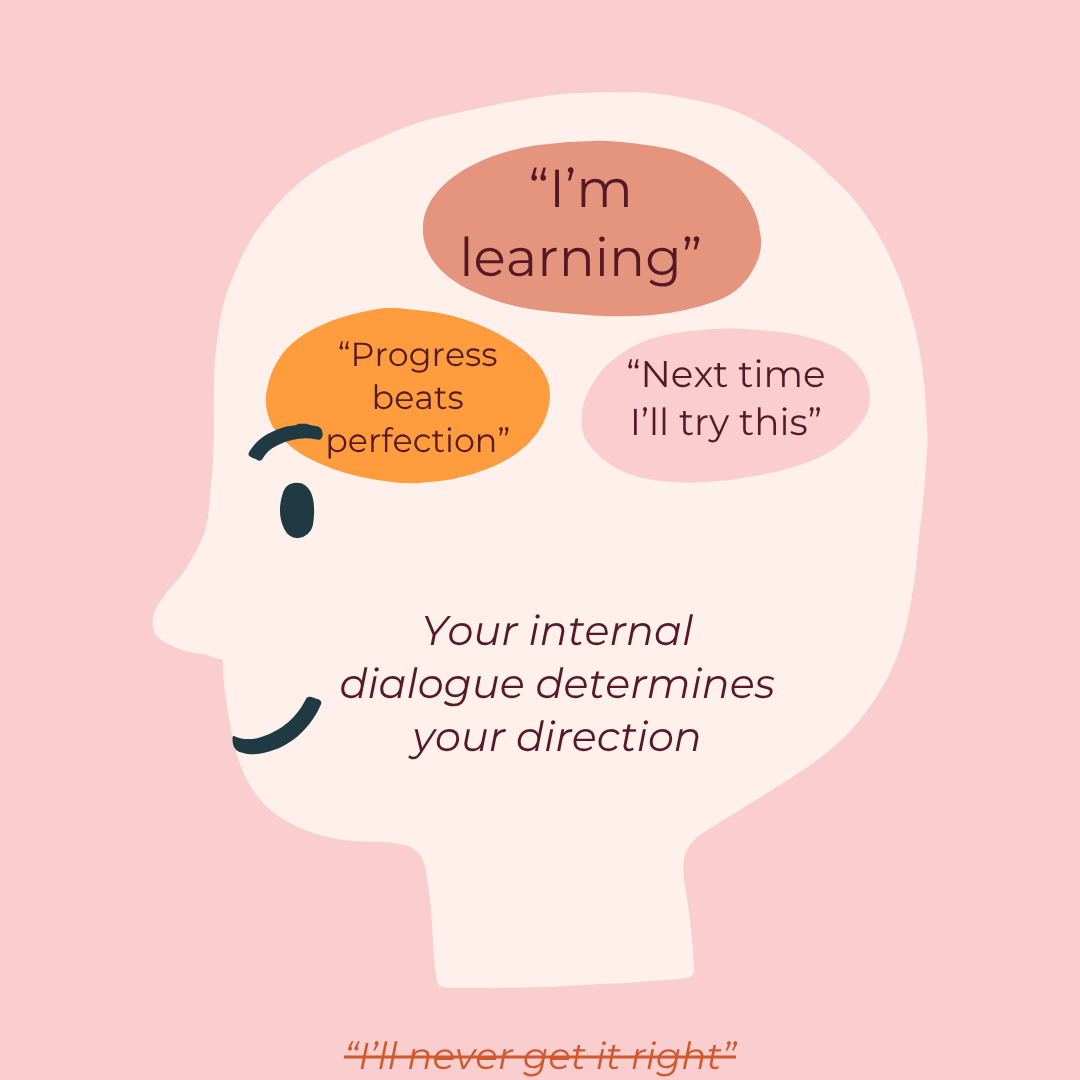
Negative self-talk often comes from deeply ingrained habits, but you can gently retrain your mind. Start by noticing when harsh thoughts arise and pause before accepting them as truth. Ask yourself, “Would I say this to a friend?” If not, replace it with a kinder, more supportive statement. Practice gratitude daily to shift focus toward what’s working well. Surround yourself with affirmations, uplifting people, and environments that reinforce self-worth. Progress takes time and self-compassion grows through repetition. Treat mistakes as learning opportunities, not failures. By consistently choosing gentleness over criticism, you’ll build resilience and cultivate a healthier, kinder relationship with yourself.
Additional Reading
Why do I criticize myself more than I praise others?
It can be natural for our brains to look for what’s wrong. That kept ancient humans alive when we needed to avoid wolves and find food. Today, it can make for brutal self-talk. When you notice that inner critic kicking in, pair it with something you handled well; creating a balance. You’re teaching your brain to notice reality, not just problems. You don’t need to reach some perfect level of self-love. Start with self-respect. Treat yourself the way you treat people you care about.
How do I boost my confidence when I’m not motivated?
Confidence doesn’t show up first; intention and action do. Start with one small win: a five-minute walk, making your bed, or even power-posing for a minute. Those tiny actions create proof that you are capable. Confidence grows from evidence, not wishes. Confidence isn’t something you wait for. It’s something you generate. Another way to start building confidence is to start with a calm emotional and physiological state. It’s difficult to do something when we are upset, stressed, or fatigued. Start by getting into a positive emotional state that is more open to enhance confidence.
Additional Reading
What are simple ways to rewire my mindset for healthier habits after 40?
You can reshape your mindset and habits at any age, thanks to neuroplasticity (the brain’s ability to adapt). Your mindset shifts when your habits do. Try:
- Reframing limiting beliefs: Challenge thoughts like “I don’t have time” to “I will make time.”
- Vicarious experiences: Seeing others succeed boost your belief in your own ability to rewire.
- Movement: Releasing endorphins and reinforcing positive routines.
- Practicing self-compassion: Replace “I’m too old” with “I’m learning new ways to thrive.”
- Do 5 minutes of daily meditation: Quiet negative self-talk by noticing automatic thoughts and consciously choose healthier responses.
- Consistency: Repetition builds new neural pathways. One small daily action (consistency beats intensity).
Additional Reading
How can I let go of perfectionism and finally make real progress?
Perfectionism can keep you stuck and chasing flawless outcomes instead of embracing growth. It is fear masquerading as productivity. Don’t let perfection be the enemy of action. Trade “all or nothing” for “something is better than nothing.” Use deadlines to prevent endless tweaking. Progress comes from fewer zero-days, not flawless days. Your goal is not to do everything perfectly. It’s to keep going. By shifting focus from unattainable ideals to consistent action, you can create momentum.
Why do I keep overthinking everything and how do I break the cycle?
Overthinking is your brain trying to control uncertainty. Try this 3-step interrupt:
- Notice it: “I’m spiraling.”
- Name it: “This is worry, not truth.”
- Move your body. Physical movement interrupts mental looping better than thinking harder ever will.
You can also use slow, paced breathing to calm your nervous system so your brain can let go instead of gripping tighter. Practicing mindfulness to anchor yourself in the present, replacing rumination is helpful too.
Additional Reading
Are there easy daily mindset habits that work for busy women?
Yes. And they take less than three minutes.
- Say one kind sentence to yourself in the mirror.
- Repeat empowering statements to reframe limiting beliefs and boost confidence.
- Be grateful for one thing each day (something real, not forced).
- Celebrate one win every night, even if it's as small as taking the stairs.
- Set an intention each morning: “Here’s who I want to be today.”
- Surround yourself with uplifting people, podcasts, or content that inspires you.
Mindset does not change in big dramatic moments. It grows in micro moments, the pauses between tasks where you choose positive thoughts.
How do I build a growth mindset in my 30s, 40s, or 50s?
Allow yourself to be new at something. Start by reframing challenges as opportunities to grow rather than obstacles. Replace self-limiting beliefs with empowering ones, such as “I can improve with practice.” Try what feels unfamiliar or a little uncomfortable. Revisit old interests. What once seemed daunting might now be the perfect challenge. You grow every time you attempt instead of avoid. Confidence grows in the moments you choose courage over comfort. By consistently choosing learning over fear, you thrive and continue to evolve at any age.
Why am I so hard on myself when I mess up, and how can I change that?
Your brain thinks self-criticism equals discipline as well as a way to harness some sense of control. It doesn’t. The key is noticing your self-talk in real time. When you catch yourself being harsh, pause and stop. Take a breath and reset. You’ll be surprised how quickly ending toxic talk becomes a habit. Speak to yourself like you would to a friend: supportive, understanding, and non-judgmental. Celebrate effort, not just outcomes, and keep progress in perspective. Journaling or mindfulness can help you pause before spiraling. Over time, choosing kindness over criticism builds resilience and a healthier relationship with yourself.
How do I stay motivated through slow results and setbacks?
Shift from results to identity. Instead of “I want to lose weight,” try “I’m someone who takes care of myself.” When you focus on who you’re becoming rather than what you’re achieving, progress feels more natural. You stop chasing short-term wins and start reinforcing habits that align with your long-term values. Surround yourself with supportive voices and reminders of why you started. When habits support your identity, setbacks don’t derail you; they’re lessons that strengthen resilience rather than signs of failure.
Can I change my inner self-talk without feeling like I’m faking it?
Yes. Start neutral. You don’t need to channel Tony Robbins right away. Replace “I hate my body” with “I’m learning to take care of my body.” Neutral thoughts build trust, and trust builds change in your self-talk. Keep at it, and before you know it you’ll be quoting Tony Robbins— “Life doesn’t happen to me, it happens for me.”
Additional Reading
What are practical steps to create self-acceptance and a positive outlook?
Acceptance isn’t giving up. It’s starting from reality. Creating self-acceptance and a positive outlook begins with embracing imperfection as part of being human. A few ways to harness this include:
- Starting each day with one kind thought about yourself to set the tone.
- Doing a quick “win review” at night. If you don’t celebrate your wins, who will?
- Focusing on one habit that supports who you want to become.
- Journaling to help you process and recognize progress.
- Challenging negative self-talk by replacing it with compassionate, realistic affirmations.
Positivity isn’t a mood; it’s proof collected over time.