
Healthy Habits

Heads Up! How to Prevent Tech Neck

Why looking down at a screen is so hard on your neck, and seven easy fixes that take the load off.

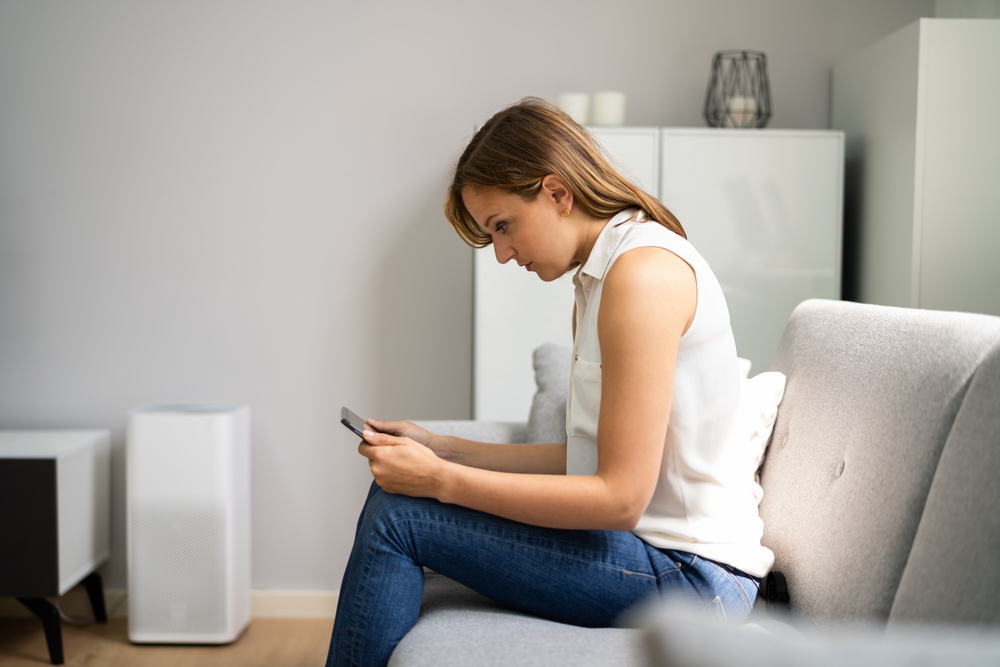
Woman sitting on a couch hunched forward over her smartphone, showing tech neck posture
Tech neck is strain in the neck, shoulders and upper back from holding your head forward to look down at a phone, tablet or laptop. It isn't an official diagnosis, and for most people it eases once posture and habits change. Raising screens to eye level and taking a break every 20 to 30 minutes are the simplest fixes.

What is tech neck?

The advent of handheld technology such as laptops, tablets and smartphones has yielded easy access to the internet; but it has also brought changes in posture for most people. With small devices, the need to bend over to see the screen has created a posture called "Tech Neck". It's the head forward, hunched over position that we move into, to better see the screen. While that name is not an official diagnosis, it is widely known as a common musculoskeletal issue.

Why looking down is hard on your neck

The average head weighs about 10-12 lbs., similar to a small bowling ball. Tilting your head forward increases the load on your neck to hold this bowling ball up at an awkward angle.

10-12 lbs
The average weight of your head, and your neck holds it up every time you look down at a screen.

Extended time in this position can cause neck and upper back discomfort, headaches, or stiffness and pain in the neck. If the cervical vertebrae of the neck are compressed, they can pinch nerves that run down your arms and cause pain all the way down to your fingers.

What happens if you ignore it

If ignored, this posture can lead to reduced mobility; chronic neck or upper-back pain; postural changes such as rounded shoulders and forward-head posture; degenerative disc issues and nerve compression or tingling in arms.

But don't despair, it is easy to rectify.

How to prevent tech neck: 7 simple fixes

  1. Raise your devices to eye level by using a holder for your phone or tablet. Keep your screen directly in front of you to avoid twisting your neck.
  2. Take frequent breaks every 20-30 minutes; practice looking far away to give your eyes a break as well. Set a timer if you tend to get caught up in work and forget how much time has passed.
  3. Keep your shoulders and neck muscles strong and flexible; see a physical therapist for help with a strengthening and stretching routine.
  4. Set up your laptop with an external monitor. The monitor should be directly in front of you at eye level. A good way to gauge your posture: sit in front of your monitor with your shoulders relaxed, arms at your side, your head over your shoulders and your eyes closed. Don't move, then open your eyes. You should be able to see your monitor clearly without having to move your head at all.
  5. Use this same posture for your tablet and phone when possible.
  6. Stop using devices and over stimulating activities 1 hour before bedtime so that you get a good night's sleep.
  7. Ask your eye doctor about prescribing "middle distance" or "Computer distance" glasses so that you can see well without having to lean forward.

Small changes, less strain

So now that you are aware of Tech neck, you can easily prevent it with frequent movement, proper posture, and ergonomic adjustments.

Frequently Asked Questions

What people ask once the ache sets in

What are the signs of tech neck?+
A stiff, achy neck, a tight upper back, and headaches that show up after a long stretch on your phone or laptop. If the strain is pinching a nerve, you may also feel tingling or pain running down your arm into your fingers. That last one is your cue to get it checked.
Why does looking down at a phone hurt so much?+
Your head weighs 10-12 lbs. Upright, your spine carries it easily. Tip it forward and the load on your neck climbs fast: one widely cited estimate puts it at about 27 lbs at a 15-degree tilt and 60 lbs at 60 degrees. Your neck isn't built to hold that for hours.
How do I know if my screen is at the right height?+
Sit with your shoulders relaxed and your head over your shoulders, then close your eyes. Open them without moving. If you can see the screen clearly without tilting your head, you're set. If you have to look down, raise the screen.
Can tech neck cause permanent damage?+
For most people, tech neck is muscle strain that gets better once posture and habits change. Left alone for years, it can contribute to chronic pain and disc or nerve problems. Researchers are still sorting out how much screens cause on their own, but the fixes are cheap and easy, so there's no reason to wait.
When should I see a doctor about neck pain?+
If the pain hangs around despite better posture and breaks, or you notice numbness, tingling, or weakness in your arms or hands. Those can point to a compressed nerve, and that's worth a professional look rather than waiting it out.

Want help building the habit?

Sitting tall and taking breaks is a habit, and habits stick better with a little nudge. Try the Avidon app for $7.20 a month with code HABITS.

Author

  • Avidon Health team member professional headshot

    Pam Faccone is the Health Coach Team Lead at Avidon Health, where she has dedicated the past 5 years to empowering employees on their health journeys, working on-site with a leading healthcare system.

    Prior to joining Avidon, Pam played a vital role in enhancing employee well-being at a leading financial institution. As a key member of their internal wellness program, she was responsible for a wide range of initiatives, including on-site fitness centers, ergonomics programs, community outreach, and support services for employees with childcare and eldercare responsibilities.

    Pam holds an M.S. in Exercise Science and is a Certified Exercise Physiologist and National Board Certified Wellness Coach.

    A dedicated member of her community, Pam volunteers her time with her local Zoning Board and Boy Scout troop.

    Outside of work, Pam enjoys an active lifestyle. She is an avid cyclist, having completed a ten-year journey across the United States. She is also a dedicated yogi and enjoys exploring nature with her 7-year-old Labrador Retriever.

Looking to join our team? Click here for an important message