Their study of nearly 1,400 adults found the same pattern again and again: the more clutter people lived with, the less satisfied they were with their homes and with life in general.
Writing in Psychology Today, neuropsychologist Diane Roberts Stoler, Ed.D., pulls together the research connecting disorganization and clutter to mental health conditions, including depression, anxiety, and stress. Messy environments can cause frustration, helplessness, and feeling overwhelmed. The feelings can spiral, making it difficult to find the motivation to address the clutter.
Why decluttering is worth the effort
There are many positive reasons to declutter. Decluttering increases self-worth, creates healthy habits, and boosts productivity. People often find that a clean and tidy home helps them sleep better, lifts their mood, and makes it easier to relax. It cuts down on dust, and on the piles that give pests somewhere to hide. Socially, you'll be more willing to invite friends and family over with an inviting space. Having less "stuff" can help you pare back on shopping, which saves money now and keeps items out of a landfill later.
First, ask yourself why you keep things
So how do you get started? First, take an honest look at why you keep things.....is it guilt, lack of decision making, a sense of identity, laziness? This may help you let go of some items sooner.
How to start decluttering: 7 methods that work
When you are ready to get started....start small. Here are some practical strategies that may help you declutter.
The 4 box method
To help with decision making, try sorting items into 4 categories. Items to 1) keep, 2) donate, 3) recycle, and 4) throw away. Then deal with each box appropriately.
The 5 second rule
You have 5 seconds to remember the last time you used the item. If you can't remember, let it go.
The rule of 5 years
If you haven't used the item in 5 years, let it go. Clothing can be cut back to 2-3 years.
Tackle it by space or category
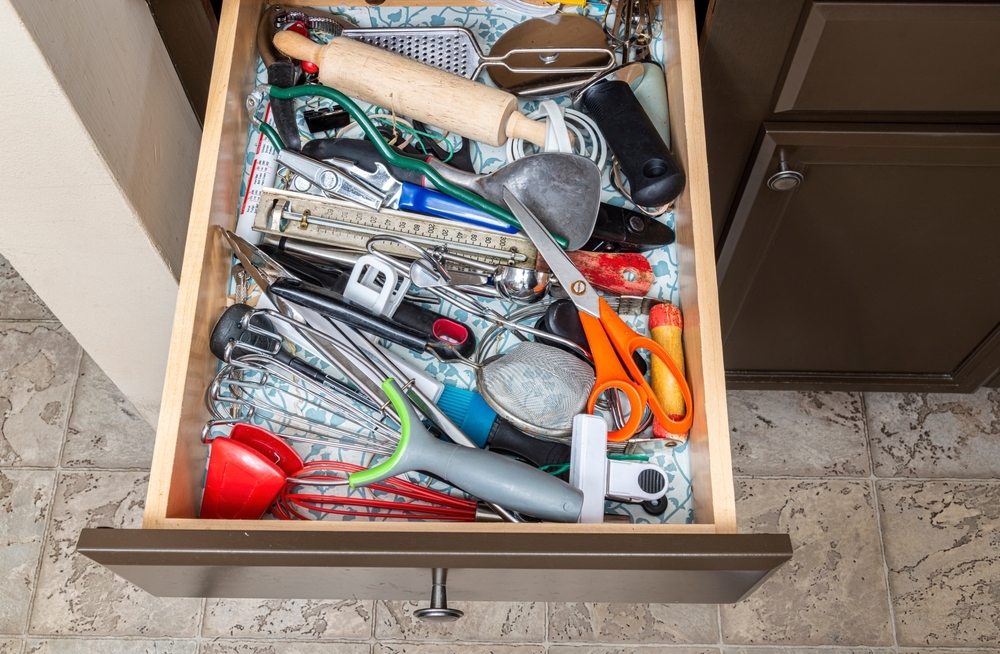
Start small.....just one spot, one chair or one drawer at a time. Ask yourself: what would you keep if you lived in a tiny house?
One in, one out
This is a way to maintain balance in your house. If you bring home something new, like a shirt or shoes, you must then divest an older similar item like an old shirt or old pair of shoes. It helps prevent accumulating massive piles again once you've decluttered.
Clean as you go
Take care of the task right away. Hang clothes up or put them in the hamper, not on the floor. Sort mail as soon as you come in the door. Wash dishes or put them in the dishwasher, not the sink. Teach children to put a toy away before they take out the next one.
Set a timer for 15 minutes
So you're ready to declutter. Set a timer for a short amount of time, say 15 minutes, and pick just one space to start, like a chair filled with clothes or a drawer. You'll find that once you start, it's easier to keep going.
Decluttering makes room for more than space
Decluttering isn't just about creating more space in your home. It's about making room for a life that feels lighter, freer, and more intentional, and for joy, peace, and new experiences. And sometimes, releasing the past is the best way to step fully into the present.