For small and mid-sized businesses, launching an employee wellness program can feel complex, expensive, or out of reach. Many organizations delay implementation, not because they lack interest, but because they lack a clear, actionable plan.
In reality, you can launch a structured, effective wellness program in 90 days or less without enterprise budgets or large HR teams. Here's how to do it.
An employee wellness program can be launched in 90 days by defining clear goals, selecting a simple and scalable platform, and rolling out a structured engagement plan across three phases: planning, vendor setup, and employee launch. The most effective programs prioritize behavior change, not just participation.
- Why Employee Wellness Programs Matter
- What Does a Wellness Program Include?
- Why Most Wellness Programs Fail
- The 90-Day Timeline
- Phase 1: Planning & Alignment (Days 1–30)
- Phase 2: Vendor Selection & Setup (Days 31–60)
- Phase 3: Launch & Engagement (Days 61–90)
- Cost of a Wellness Program
- Implementation Checklist
Key Takeaways
- You can launch a wellness program in three phases over 90 days: planning, vendor selection, and launch
- The most successful programs focus on behavior change, not just participation
- SMBs should prioritize simple, scalable solutions over complex enterprise platforms
- Typical costs range from $3–$15 per employee per month
- A well-structured rollout plan significantly improves engagement and ROI
Why Employee Wellness Programs Matter.
Employee wellness programs have become a priority for organizations trying to manage rising healthcare costs, burnout, and retention challenges. The ability to scale them to fit the ebb and flow of business needs is key.
For smaller organizations, these effects are often more noticeable because changes impact a larger percentage of the workforce. They directly impact:
- Healthcare costs
- Productivity and absenteeism
- Retention and morale
- Burnout and workplace culture
A small shift in employee health can create outsized business impact. Organizations investing in structured wellness initiatives often see improvements in engagement, reduced turnover, and better overall performance.
According to a 2025 study from the University of Georgia and the CDC, physical inactivity costs the U.S. healthcare system $192 billion annually, a burden that flows directly into employer healthcare claims and lost productivity.
What Does an Employee Wellness Program Include?
A modern employee wellbeing program includes a combination of the following:
- Habit-building programs across sleep, nutrition, alcohol use, and stress
- Mental health and resilience support
- Coaching or guided behavior change using digital health coaching tools
- Light challenges or engagement campaigns
- Progress tracking and reporting tools
- Integration with personal devices like Fitbit or Apple Watch
While formats vary, the most effective programs blend structure, behavioral support, and measurable outcomes.
Examples of Employee Wellness Initiatives
These examples reflect the types of activities employees participate in within a wellness program. Effective wellness platforms structure these experiences to keep employees engaged, with clear goals, defined timeframes, and measurable outcomes:
- A 6-week sleep improvement program with weekly check-ins, habit tracking, and short daily prompts
- A company-wide step challenge with team-based goals, leaderboards, and small incentives
- A stress management program with guided sessions, micro-lessons, and daily exercises
- A coaching program focused on reducing alcohol consumption or improving nutrition, with personalized guidance over 4–8 weeks
Why Most Wellness Programs Fail.
Before building a program, it's important to understand what doesn't work. Most wellness programs don't fail because of a lack of intent. They fail because they are difficult to use or poorly aligned with employee needs.
- Overly complex platforms designed for enterprise companies
- Low engagement due to lack of personalization
- Programs focused on content instead of actual behavior change
- No clear rollout or communication strategy
- HR teams overloaded with manual coordination
The takeaway: success comes from simplicity, structure, and behavior-driven design.
The 90-Day Wellness Program Timeline.
Launching a program doesn't require a year-long initiative. Most SMBs can move from planning to launch in a single quarter with the right structure in place. In practice, many modern platforms can significantly accelerate this timeline by simplifying setup, automating onboarding, and reducing the need for internal coordination. For many organizations, this means launching in a matter of weeks, not months.
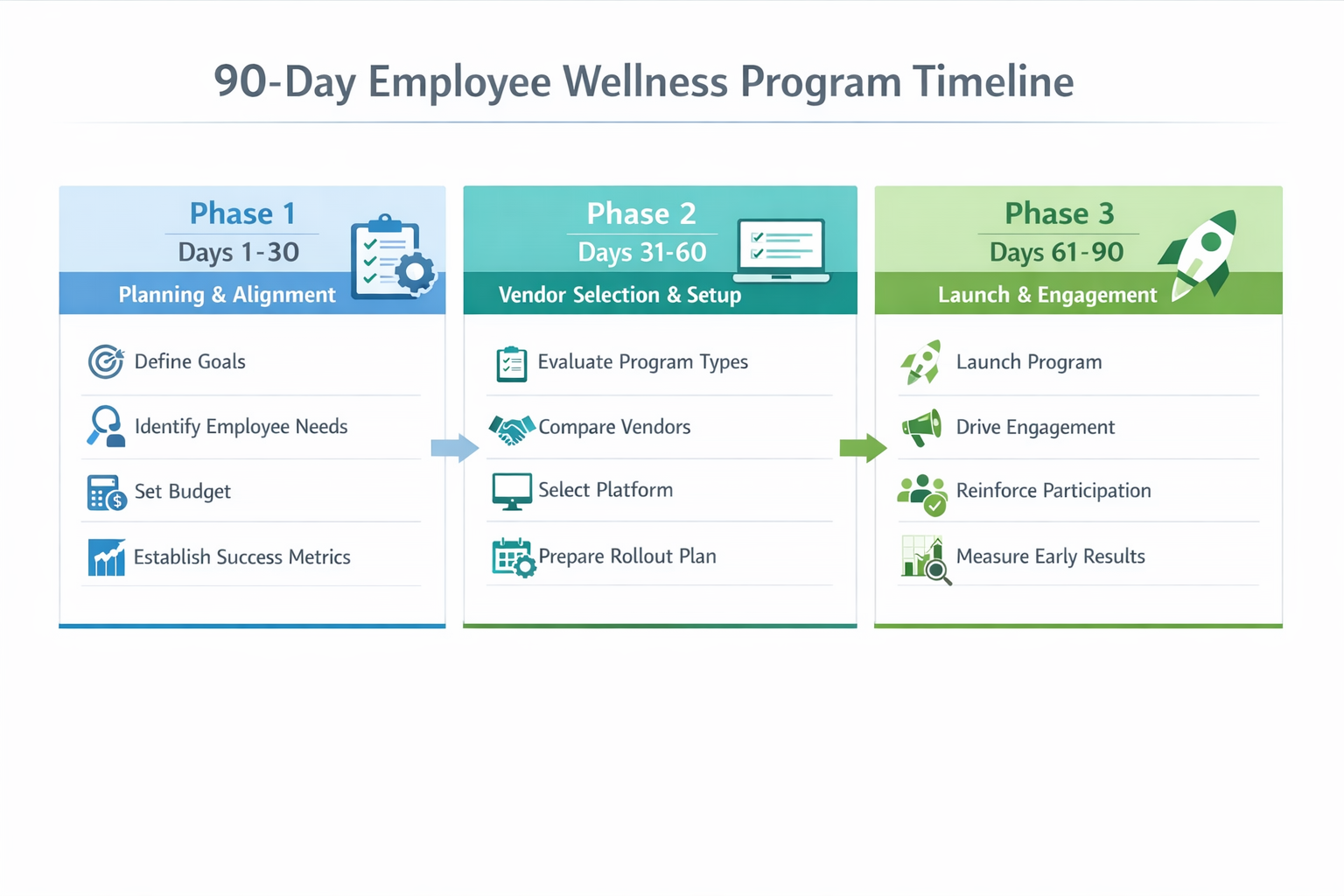
Phase 1: Planning & Alignment (Days 1–30).
In this phase, you'll define goals, understand your workforce, and set the foundation for a successful program.
Step 1: Define Your Goals
Start with clarity. What problem are you solving? This step sets the direction for everything that follows, from vendor selection to how you measure success.
Common goals:
- Reduce healthcare costs
- Improve employee engagement and morale
- Address burnout or stress
- Support healthy habits around sleep, nutrition, or substance use
Tip: Focus on 1–2 primary outcomes to guide your messaging and rollout. Over time, most programs naturally impact multiple areas.
Step 2: Identify Your Population
If needed, segment your workforce so the program feels relevant and accessible to employees:
- Desk-based vs. frontline employees
- Remote vs. in-office
- Age and lifestyle patterns
This helps you choose the right program structure and communication approach.
Step 3: Set a Budget
| Company Size | Monthly Budget per Employee |
|---|---|
| 10–50 employees | $5–$15 / PEPM |
| 50–200 employees | $4–$12 / PEPM |
| 200+ employees | $3–$10 / PEPM |
Step 4: Define Success Metrics
Avoid vague goals like "increase engagement." Instead, track:
- Participation rate
- Weekly active users
- Self-reported habit changes like sleep quality and stress levels
- Employee feedback
Phase 2: Vendor Selection & Setup (Days 31–60).
During this phase, you'll evaluate vendors, select the right platform, and prepare for implementation.
Step 5: Understand Program Types
| Type | Description | Best For |
|---|---|---|
| Content-Based Platforms | Articles, videos, wellness libraries | Low-cost, low engagement |
| Incentive-Based Programs | Challenges, rewards, step tracking | Short-term engagement |
| Behavior Change Platforms | Coaching + habit tracking | Long-term outcomes |
SMBs benefit most from behavior change platforms that are simple and automated. Platforms that combine habit tracking, coaching, and automation reduce administrative burden while improving ongoing engagement. Learn more about how health coaching platforms work → or see how top wellness companies compare →
Step 6: Compare Vendors
| Feature | Basic Platforms | Mid-Tier | Behavior Change Platforms |
|---|---|---|---|
| Cost | Low | Moderate | Moderate |
| Engagement | Low | Medium | High |
| Personalization | Minimal | Moderate | High |
| Coaching | No | Limited | Yes |
| Setup Complexity | Low | Medium | Low |
Step 7: Evaluate Key Features
Look for features in a corporate wellness platform that reduce friction for both employees and administrators:
- Automated onboarding
- Habit tracking and digital coaching tools
- Regularly updated content or programs to keep employees engaged over time
- Manager and HR dashboards
- Minimal admin overhead
Avoid tools that require heavy internal management.
Step 8: Prepare for Implementation
Before launch, take time to align internally so the rollout feels intentional rather than rushed:
- Confirm internal owner (HR or leadership)
- Set launch date
- Align messaging and expectations
- Prepare internal communication
Phase 3: Launch & Engagement (Days 61–90).
In this phase, you'll launch the program, drive early engagement, and begin tracking performance.
Step 9: Launch the Program
A strong launch matters more than most companies expect. Employees will decide pretty quickly whether this is worth their time.
- Company-wide announcement
- Clear explanation of benefits
- Simple sign-up process
- Leadership endorsement
Step 10: Drive Early Engagement
The first 30 days after launch are critical. This is when habits begin to form and participation patterns emerge. Focus on:
- Weekly reminders
- Highlighting quick wins
- Sharing participation milestones
- Encouraging small habit changes
Step 11: Build Momentum
After the initial launch, you've likely built awareness and can start focusing on consistency:
- Introduce challenges
- Share success stories
- Reinforce consistency and recognize participation
Step 12: Measure and Optimize
After 90 days, review performance to understand what's working and where to adjust:
- Participation rate
- Engagement trends
- Feedback from employees
Use this data to refine, not rebuild, the program. Focus on improving engagement over time.
Cost of a Wellness Program.
Typical Pricing Models
| Model | Description | Cost Range |
|---|---|---|
| Per Employee Per Month (PEPM) | Subscription-based | $3–$15 |
| Tiered Pricing | Based on company size | Varies |
| Add-On Coaching | Additional services | +$2–$10 |
What Drives Cost
- Level of personalization — generic vs. tailored programs
- Coaching availability — automated vs. human coaching
- Technology sophistication — basic tools vs. fully integrated systems
- Reporting capabilities — basic usage data vs. detailed insights
Cost vs. ROI
Understanding the ROI of an employee wellness program helps you evaluate its long-term impact. Even modest improvements can lead to:
- Reduced absenteeism
- Lower healthcare claims
- Improved retention
- Increased productivity
- Improved morale
The key is consistent engagement, not program complexity.
Implementation Checklist (90-Day Summary).
Month 1: Planning
- Define 1–2 primary program goals
- Segment your workforce
- Set per-employee budget
- Establish measurable success metrics
Month 2: Vendor Selection
- Evaluate program types for your workforce
- Compare vendors on key features
- Select platform and confirm launch date
- Prepare internal rollout plan and communications
Month 3: Launch
- Announce program company-wide
- Drive early engagement with prompts and reminders
- Track participation weekly
- Collect early employee feedback
Vendor Evaluation Checklist
- Does this program drive behavior change or just participation?
- How much admin work is required internally?
- Will we be supported with launch materials?
- Is the experience simple for employees?
- What level of personalization is included?
- Are there measurable outcomes beyond usage?