Table of Contents
How Much Does an Employee Wellness Program Cost?
If you’re pricing wellness because leadership gave you a budget number,this guide shows per-employee benchmarks, the three pricing models vendors actually use, and a framework for comparing vendors.
Average Cost of Wellness Programs by Company Size
How much do corporate wellness programs cost on average? The answer depends on three factors: your company size, the scope of services you need, and whether you choose a digital-first platform or a full-service provider.
Here is what most organizations can expect to budget:
Cost of Corporate Wellness Programs by Tier
How Different Wellness Platforms Price Per Employee
Pricing models vary by vendor. Some charge a flat per-employee-per-month (PEPM) fee regardless of participation. Others use a per-active-user model where you only pay for employees who actually engage. A few use tiered pricing based on company size, where larger organizations get lower per-employee rates.
For small businesses with fewer than 100 employees, expect to pay at the higher end of per-employee rates because you lack the volume discount that larger organizations negotiate. The best value corporate wellness consulting packages for small businesses typically start at the Basic Digital tier ($3-$5/employee/month) and scale up as your program matures.
What Drives Cost Up
- Human coaching: Live, 1:1 health coaching is the most expensive component, typically adding $20-$50/employee/month
- Biometric screenings: On-site or lab-based screenings add $50-$150 per employee per event
- Incentive programs: Gift cards, premium reductions, or HSA contributions can add $100-$500/employee/year
- Custom content: Branded courses, challenges, and communications add development costs
- Integration complexity: Connecting to your HRIS, benefits platforms, or claims data requires technical work
Free Resource
Not ready to invest? Start with our Zero-Cost Wellness Toolkit.
Dozens of proven, no-budget wellness strategies your team can launch this week. No vendor required.
Wellness Program ROI: Is the Investment Worth It?
Hidden Costs of Employee Wellness Programs
The sticker price is only part of the employee wellness program cost. These are the hidden costs that quietly erode your budget and ROI:
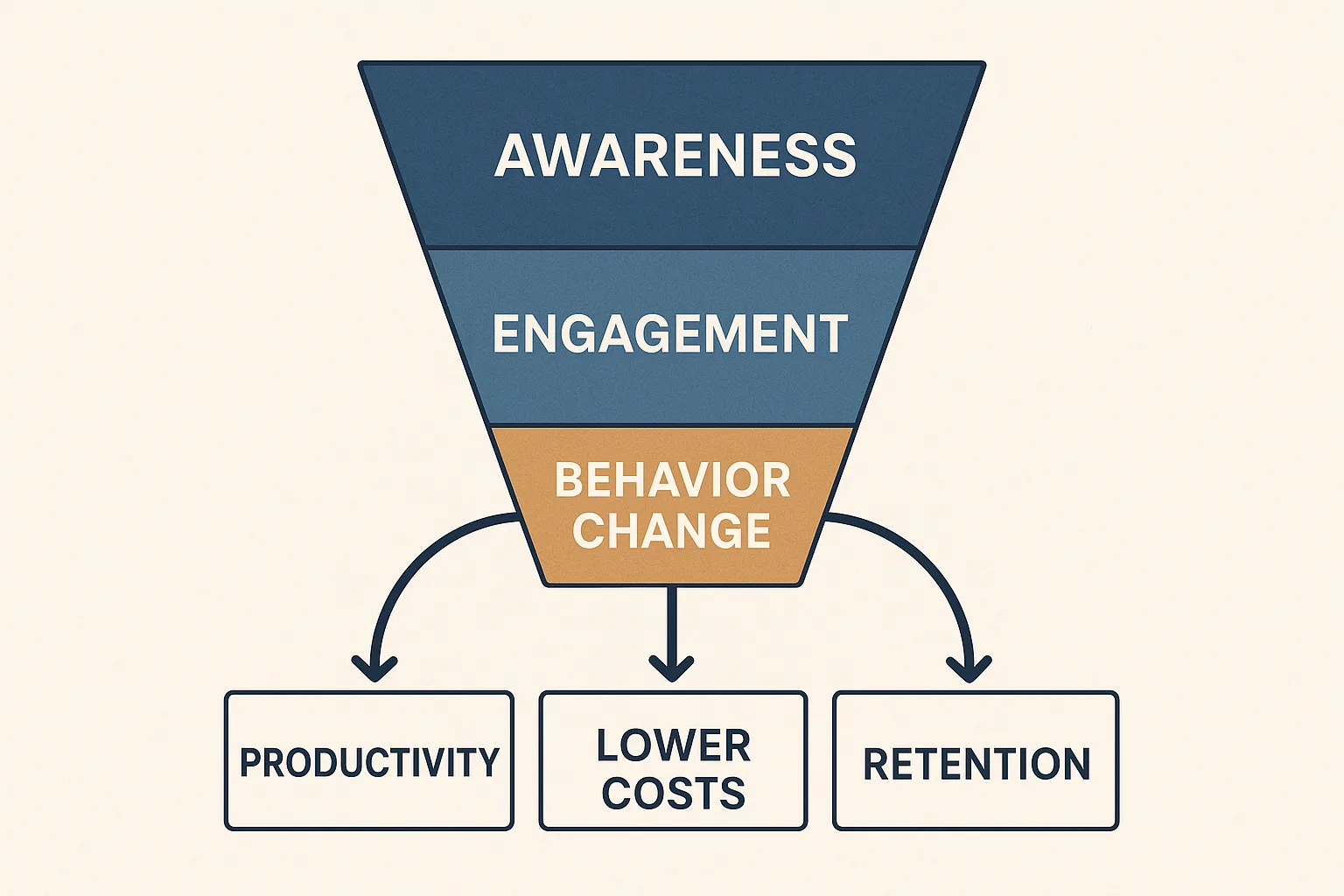
- Low participation: If only 10-15% of employees engage, your per-participant cost skyrockets. A $5/employee program with 10% participation effectively costs $50 per active user. Personalization and evidence-based engagement strategies are the fix.
- Platform fragmentation: Stacking disconnected tools (one for challenges, another for coaching, another for reporting) creates admin overhead and confuses employees. A unified platform reduces both cost and friction.
- Manual administration: If your HR team spends 5-10 hours per week coordinating wellness activities, that is a real labor cost that most budgets ignore.
- One-size-fits-all content: Generic programs fail because they do not meet employees where they are. The most effective programs use behavioral science to personalize the experience. Burnout and grind culture cannot be solved with a step challenge.
- Vendor switching costs: Choosing the wrong vendor means 6-12 months of sunk implementation time, lost employee trust, and the cost of starting over.
Key Features of Cost-Effective Wellness Platforms
The most cost-effective wellness solutions share these traits. Use this as a checklist when evaluating platforms:
- Automation and personalization: Delivers support at scale without significant staffing. Look for platforms that use behavioral science to tailor content to each employee’s stage of change.
- Multi-channel engagement: Mobile app, email, text, and wearable integration to meet employees wherever they are.
- Real-time analytics: Enables timely adjustments and clear visibility into participation, outcomes, and program ROI.
- Behavior change methodology: Programs grounded in cognitive behavioral training, not just gamification, produce lasting results. Evidence-based health coaching is the differentiator.
- System integration: Reduces manual work by connecting to your HRIS, benefits admin, and claims data.
- Scalable pricing: Grows with your organization so you are not overpaying at 50 employees or underpowered at 500.
How to Compare Corporate Wellness Program Vendors
Choosing the right wellness partner is not just about the lowest employee wellness program cost. It is about capabilities, scalability, and proven outcomes. Here is what to evaluate:
- Engagement rates: Ask for average participation rates across their client base, not just cherry-picked case studies.
- Outcome data: Do they have published research or third-party validation of health outcomes?
- Pricing transparency: Can they give you a clear per-employee cost with no hidden fees for implementation, reporting, or content?
- Content depth: How many programs, courses, and challenges are included? Are they evidence-based?
- Technology: Is the platform mobile-first? Does it integrate with wearables and your existing HR systems?
- Support model: Do you get a dedicated account manager or are you routed to a help desk?
Use our side-by-side vendor comparison tool to evaluate providers across these criteria. You can also see how Avidon compares to Noom and other popular platforms.
Free and Low-Cost Wellness Program Ideas That Work
Not every impactful initiative requires budget. Many organizations start with zero-cost wellness ideas and build from there. Here are proven strategies that drive engagement without spending a dollar:
- Walking or hydration challenges: Simple, social, and effective for building team culture
- Mental health days: Designate days off specifically for wellbeing
- Peer-led fitness groups: Leverage employees who are already passionate about health
- Healthy recipe exchanges: Build community around nutrition without preaching
- Workspace ergonomics tips: Free content that reduces physical strain
- Guided mindfulness sessions: 5-minute team breathing exercises cost nothing
For a comprehensive list of no-budget strategies, explore our complete guide to zero-cost wellness programs, which includes dozens of proven tactics your team can launch this week.
These free initiatives are also a smart way to build the business case for a funded program. Show leadership that employees want wellness support, then propose the budget for a scalable digital wellness platform that amplifies what you started for free.
Compliance and Legal Considerations
When budgeting for an employee wellness program, factor in compliance requirements that can affect program design and cost:
- HIPAA: Protects the confidentiality of employee health information collected during screenings or assessments. Your vendor must be HIPAA-compliant and willing to sign a Business Associate Agreement.
- GINA: Prevents the use of genetic information in making employment decisions. This affects how you structure health risk assessments.
- ADA: Ensures wellness programs are inclusive and do not discriminate against employees with disabilities. Incentive structures must be reasonable.
- EEOC Guidelines: Incentive-based programs must remain voluntary and non-coercive. The EEOC has placed limits on the size of incentives tied to health screenings.
Compliance expectations continue to evolve, especially around digital wellness platforms and data privacy. Choosing a vendor that stays current with legal standards, like one that maintains ISO 27001 certification, helps ensure your program remains compliant and trustworthy.
Making Your Wellness Investment Count
Understanding employee wellness program cost is not just about finding the cheapest option. It is about making a strategic investment that aligns with your organization’s goals, fits your budget, and actually moves the needle on employee health and engagement.The organizations that get the best return start with clear goals, choose a platform built on evidence-based behavior change (not just gamification), and commit to engagement over time. Whether you are investing in a full-scale digital coaching platform or starting with grassroots zero-cost initiatives, the key is building a program that adapts to your workforce and delivers measurable outcomes.Ready to see what a wellness program would cost for your team?
Pricing Wellness for a Client? What Brokers Should Ask
Compliance and Legal Considerations
When budgeting for an employee wellness program, factor in compliance requirements that can affect program design and cost:
- HIPAA: Protects the confidentiality of employee health information collected during screenings or assessments. Your vendor must be HIPAA-compliant and willing to sign a Business Associate Agreement.
- GINA: Prevents the use of genetic information in making employment decisions. This affects how you structure health risk assessments.
- ADA: Ensures wellness programs are inclusive and do not discriminate against employees with disabilities. Incentive structures must be reasonable.
- EEOC Guidelines: Incentive-based programs must remain voluntary and non-coercive. The EEOC has placed limits on the size of incentives tied to health screenings.
Compliance expectations continue to evolve, especially around digital wellness platforms and data privacy. Choosing a vendor that stays current with legal standards, like one that maintains ISO 27001 certification, helps ensure your program remains compliant and trustworthy.
FAQs
Author

Avidon Health is transforming how organizations promote healthier lifestyles through behavior change science and technology-driven coaching. Our mission is to empower individuals to achieve better health outcomes while driving measurable business success for our clients.
With over 20 years of expertise in health coaching and cognitive behavioral training, we’ve built a platform that delivers personalized, 1-to-1 well-being experiences at scale.
Today, organizations use Avidon to reimagine engagement, enhance health, and create lasting behavior change—making wellness more accessible, impactful, and results-driven.